
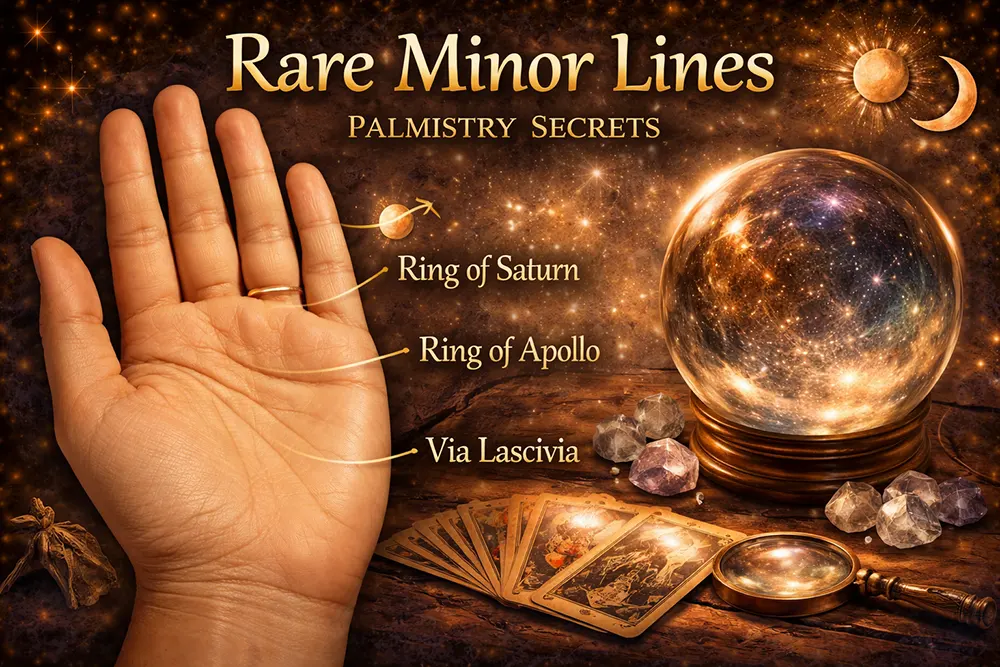
In the intricate landscape of the human palm lies a language older than words—a map of potential, challenges, and hidden strengths etched into the skin. While most people recognize the major lines like the heart, head, and life lines, the true depth of palmistry emerges in the rare minor lines. These subtle markings whisper secrets that major lines often overlook, revealing nuances of character, destiny, and personal evolution that can transform how we understand ourselves.
Among the rarest and most intriguing are three specific minor lines: the Ring of Saturn, the Via Lascivia, and the Ring of Apollo. These are not everyday features; they appear in only a small percentage of hands, making their presence a profound invitation to deeper self-discovery. Far from deterministic omens of doom or fortune, they act as mirrors reflecting our inner world—highlighting areas where energy may be blocked, amplified, or redirected. In this comprehensive exploration, we’ll dive into each line’s location, traditional interpretations, modern insights, and practical implications, blending ancient wisdom with fresh perspectives to help you read your own palms (or those of others) with clarity and empowerment.
Whether you’re a seasoned palmistry enthusiast or a curious newcomer tracing the lines on your hand under soft light, these rare markings offer real value: tools for reflection, growth, and navigating life’s complexities with greater awareness. Let’s begin by understanding why minor lines matter at all.
Why Minor Lines Deserve Your Attention in Palmistry
Palmistry, or chiromancy, views the hand as a dynamic blueprint. Major lines provide the broad strokes of life—emotional patterns, mental focus, vitality—while minor lines add the fine details, like brushstrokes in a masterpiece. They can appear, fade, or deepen over time, influenced by our choices, experiences, and mindset. This fluidity underscores a key truth: the palm is not a fixed fate but a living record of potential.
Rare minor lines like the ones we’re exploring stand out because they often form on the mounts—the fleshy pads beneath the fingers that correspond to planetary energies (Saturn for discipline and structure, Apollo/Sun for creativity and radiance, and lunar or Venusian zones for emotion and desire). Their scarcity makes them powerful; when they show up, they demand attention. They can amplify or challenge the energies of nearby major lines, offering clues about hidden talents, recurring patterns, or opportunities for transformation.
Now, let’s examine each of these rare lines one by one, starting with the enigmatic Ring of Saturn.
The Ring of Saturn: Saturn’s Subtle Shackle and Source of Inner Strength
Picture a delicate semicircular line, or sometimes a near-complete ring, encircling the base of the middle finger right at the Mount of Saturn. This is the Ring of Saturn—one of the rarest minor lines, appearing as a curved etching that seems to “seal off” the finger’s foundation. It’s not a fingerprint ridge but a distinct palm crease, often faint yet unmistakable under good lighting.
In traditional palmistry, this marking carries a weighty reputation. Saturn governs responsibility, karma, discipline, and life’s heavier lessons. A Ring of Saturn is said to symbolize barriers to these qualities: obstacles that feel fated, periods of melancholy, or a sense of emotional imprisonment. People with a strong, unbroken ring may encounter frustration in career or personal goals, as if invisible hurdles arise just when success is within reach. It can point to a serious, introspective nature that borders on pessimism, isolation, or difficulty connecting with others. In some older interpretations, it hinted at challenges like depression, self-doubt, or even a reclusive lifestyle.
Yet, this is where modern palmistry adds nuance and empowerment. Rather than viewing it as pure misfortune, think of the Ring of Saturn as a karmic checkpoint. It doesn’t doom you to failure; it highlights where Saturn’s energy—structure, maturity, and wisdom—needs conscious cultivation. If the ring is broken or composed of fragmented lines, the obstacles may be temporary or tied to specific life phases, such as early adulthood or midlife transitions. A well-defined ring on a strong Mount of Saturn can actually signal profound resilience: individuals who develop laser-like focus, philosophical depth, and the ability to turn isolation into innovative solitude.
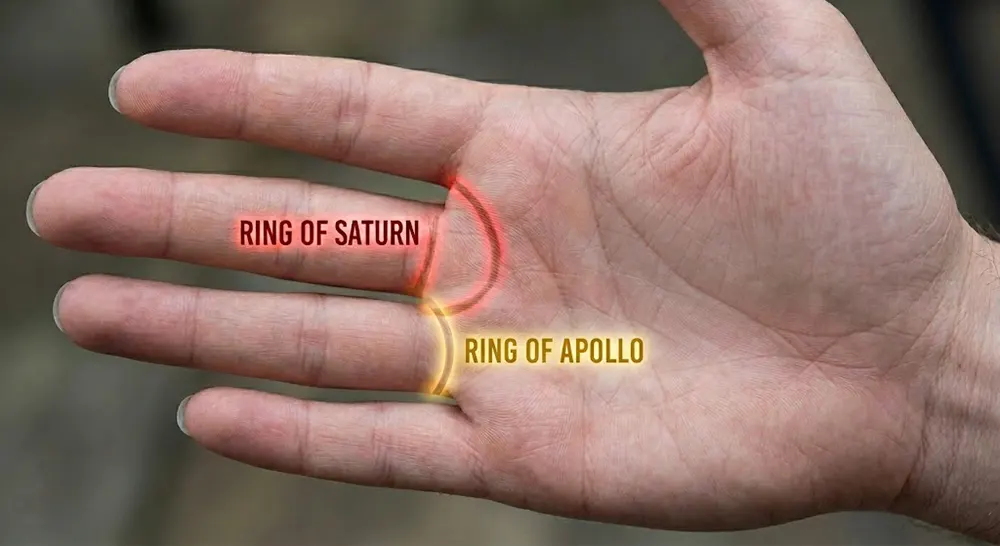
Consider how it interacts with other features. If the Ring of Saturn crosses or influences the Fate Line (the vertical line of career and purpose running up the palm), it might suggest career paths that demand perseverance through setbacks—think inventors, researchers, or leaders who thrive after overcoming early doubts. Pair it with a strong Head Line, and the person gains analytical gifts that help dismantle those “rings” of limitation.
Unique insight: In today’s fast-paced world, this line resonates with the astrological Saturn Return, a period around ages 28-30 and 56-60 where life tests maturity. Those with the Ring of Saturn often experience these cycles intensely but emerge wiser, like ancient philosophers who found clarity in solitude. Practical advice? Embrace rituals of grounding—journaling, structured routines, or mentoring others—to transmute the ring’s energy from barrier to bridge. Many with this marking report that once they acknowledge the pattern, the line itself softens over years, reflecting inner growth.
If you spot this on your hand, don’t despair. It’s a rare badge of someone destined for meaningful, if challenging, depth rather than superficial ease.
Via Lascivia: The Path of Passion, Pleasure, and Purposeful Excess
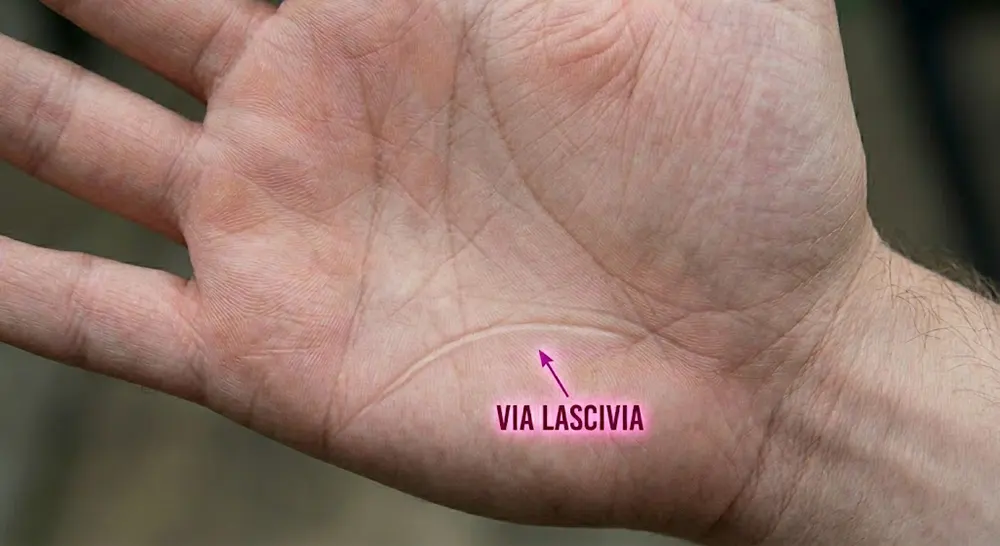
Shifting focus to another elusive marking, the Via Lascivia—sometimes called the “line of luxury,” “path of indulgence,” or even the “poison line” in older texts—presents as a horizontal or slightly curved crease running across the lower palm. It typically originates near the Mount of the Moon (the fleshy outer base associated with intuition and emotion) and travels toward the thumb side, often parallel to or branching from the Health Line (Mercury Line). In some hands, it arcs gently, connecting lunar and Venusian territories.
Historically, this line earned a provocative name tied to “lasciviousness”—a warning of overindulgence in pleasures, whether sensual, gastronomic, chemical, or experiential. Palmists of the past saw it as a marker of addictive tendencies, heightened sensuality, or a craving for excitement that could lead to health strains or emotional turbulence. A long, clear Via Lascivia might indicate someone drawn to luxury, thrill-seeking, or escapism, with potential risks to vitality (linked to kidney function or nervous energy in traditional views).
Contemporary readings flip the script toward empowerment and balance. The Via Lascivia is less a condemnation and more a call to explore the full spectrum of human desire. It signals a vibrant imagination, deep curiosity, and surplus energy that demands an outlet. Think of it as the palm’s version of a muse’s whisper: those with this line often possess exceptional creative or sensory gifts—artists, performers, chefs, or adventurers who channel “excess” into beauty and innovation.
What makes it uniquely valuable? In an era of wellness and mindfulness, the Via Lascivia invites conscious indulgence. If it starts near the Mount of Venus (base of the thumb, love and passion), it amplifies emotional appetites, suggesting rich relationships but a need for boundaries to avoid codependency. If it veers toward the Moon, it fuels intuitive leaps and vivid dreams—perfect for writers or innovators—but warns against fantasy-driven avoidance of reality.
Unique perspective: Modern psychology aligns this line with the brain’s reward pathways. It reflects a personality wired for dopamine-driven exploration, which can manifest as groundbreaking creativity or, unchecked, as addictive loops. Those with it frequently describe “eureka” moments born from pushing limits—whether through travel, intense hobbies, or sensory arts. To harness it positively, pair awareness with practices like mindful consumption, creative rituals, or therapy to redirect cravings into productive flow.
If the Via Lascivia intersects the Life Line, it can infuse vitality with zest, turning routine into adventure. Its rarity makes it a gift for those willing to master their appetites rather than be ruled by them.
The Ring of Apollo: The Creative Eclipse and Catalyst for Artistic Awakening
The third rare gem is the Ring of Apollo, a semicircular or ring-like crease encircling the base of the ring finger at the Mount of Apollo (also called the Mount of the Sun). Like its Saturn counterpart, it appears as a curved line that seems to “veil” the finger’s root, though it’s even scarcer.
Apollo energy embodies creativity, charisma, fame, optimism, and the joy of self-expression. A Ring of Apollo traditionally signals temporary blocks or frustrations in these areas: repressed artistic talent, difficulty gaining recognition, or moments where inspiration feels eclipsed. It may manifest as creative dry spells, self-criticism in the arts, or a sense that external validation is elusive despite innate gifts.
Here’s the empowering twist: this ring isn’t a permanent curse but a forge for resilience. Many palmists note that overcoming its influence leads to profound artistic growth—individuals who push through blocks often achieve deeper, more authentic success. The effort required to “break” the ring metaphorically strengthens the Sun’s radiance, turning potential frustration into refined talent and greater appreciation for beauty.
Interactions add layers. If a Sun Line (vertical success line under the ring finger) is present alongside the ring, the blockage may be short-lived, leading to late-blooming acclaim. On a dominant hand, it points to conscious creative challenges; on the passive hand, inherited or early-life patterns.
Fresh angle: View the Ring of Apollo through a lens of personal mythology. Apollo was the god of light and arts—his “ring” creates a symbolic shadow that heightens contrast, making eventual brilliance more vivid. In practice, those with it thrive in fields requiring perseverance, like writing, visual arts, or performance. Advice includes daily creative habits, seeking feedback, and celebrating small wins to dissolve self-imposed veils.
When These Rare Lines Converge: Patterns and Synergies
Encountering more than one of these lines is exceptionally rare and fascinating. A Ring of Saturn paired with Via Lascivia might describe a disciplined soul tempted by indulgence, creating a push-pull dynamic ideal for transformative careers (e.g., wellness innovators or therapists). Adding the Ring of Apollo intensifies creative tension, suggesting a life of profound artistic or spiritual evolution after navigating internal rings and paths.
Always read them in context: hand shape (earth, air, fire, water), dominant vs. passive hand, and major lines. A flexible hand with these markings leans toward adaptability; a rigid one, toward needing deliberate change.
Practical Guidance: Reading and Responding to These Lines
To identify them, examine both hands in natural light. Trace from the base of the fingers downward. Note strength, breaks, or islands—these modify meanings. Remember, palms evolve; photograph yours yearly to track shifts.
For real-world application:
- Ring of Saturn: Build routines and seek community to counter isolation.
- Via Lascivia: Channel passions into sustainable outlets like creative projects or mindful travel.
- Ring of Apollo: Commit to consistent artistic practice; the ring often fades as confidence grows.
These lines remind us that rarity equals uniqueness—your hand’s story is yours to shape.
Frequently Asked Questions About Rare Minor Lines in Palmistry
What if I have the Ring of Saturn—does it mean bad luck?
Not inherently. It highlights challenges in discipline and emotional flow, but awareness turns it into a strength for resilience and wisdom.
Is the Via Lascivia always negative, signaling addiction?
No. Traditionally linked to excess, it more often points to high vitality and curiosity. Balance is key; many with it excel in passionate, creative lives.
How rare is the Ring of Apollo, and what does it mean for artists?
Extremely rare. It suggests creative hurdles that, when overcome, foster exceptional talent and growth—ideal for dedicated creators.
Can these lines appear or disappear over time?
Yes. Hands change with life experiences, mindset shifts, and choices. Positive actions can soften or alter them.
Do these lines affect love and relationships?
Indirectly. The Ring of Saturn may indicate reserved emotions; Via Lascivia, intense passions; Ring of Apollo, expressive but sometimes blocked affection. Context with the Heart Line is crucial.
How do I check for these lines accurately?
Use good lighting, relax your hand, and compare both palms. If unsure, consult a professional palmist for personalized reading.
What if my lines are faint or broken?
Fainter markings suggest milder influences; breaks indicate periods of change or relief from patterns.
Are there cultural differences in interpreting these lines?
Yes—Western palmistry emphasizes psychology, while Indian or Chinese traditions link them more to karma or health. Core themes of energy flow remain consistent.
Should I worry if I have multiple rare lines?
No. They signal a complex, rich inner life with high potential for growth when approached mindfully.
How can palmistry with these lines help daily life?
It promotes self-awareness, encouraging proactive steps toward balance, creativity, and fulfillment.
Embracing the Rare: A Meaningful Close to Your Palmistry Journey
The Ring of Saturn, Via Lascivia, and Ring of Apollo are more than esoteric curiosities—they are profound reminders that life’s rarest features often hold our greatest lessons. These lines don’t predict inescapable fate; they illuminate paths where we can choose growth over limitation, passion over excess, and creativity over conformity.
In a world that prizes the obvious, these minor markings reward the observant. They invite introspection: What barriers am I ready to transcend? Where can I channel my deepest desires productively? How will I let my unique light shine despite any veils?
Ultimately, palmistry empowers because it shifts focus from prediction to possibility. Whether your hand bears one of these rare lines or none at all, the act of looking—truly seeing—fosters a more intentional life. Trace your palm today, reflect on its whispers, and step forward with the confidence that even the rarest markings are part of a beautifully unfolding story.
Your hands hold the map. The journey, as always, is yours to navigate with curiosity, courage, and care.
Related Posts
The Influence of Mounts on Life Line Strength in Palmistry: Unlocking Your Vitality Blueprint
Sun Line and Wealth: How Your Palm’s Apollo Line Reveals Financial Creativity
Life Line Ending in a Fork: Paths to Longevity
Partial Sun Line in Palmistry: Emerging Talent and Recognition
Famous Personalities with Strong Fate Lines
Faint Fate Line in Palmistry: What It Reveals About Gradual Career Development and Your Destiny