
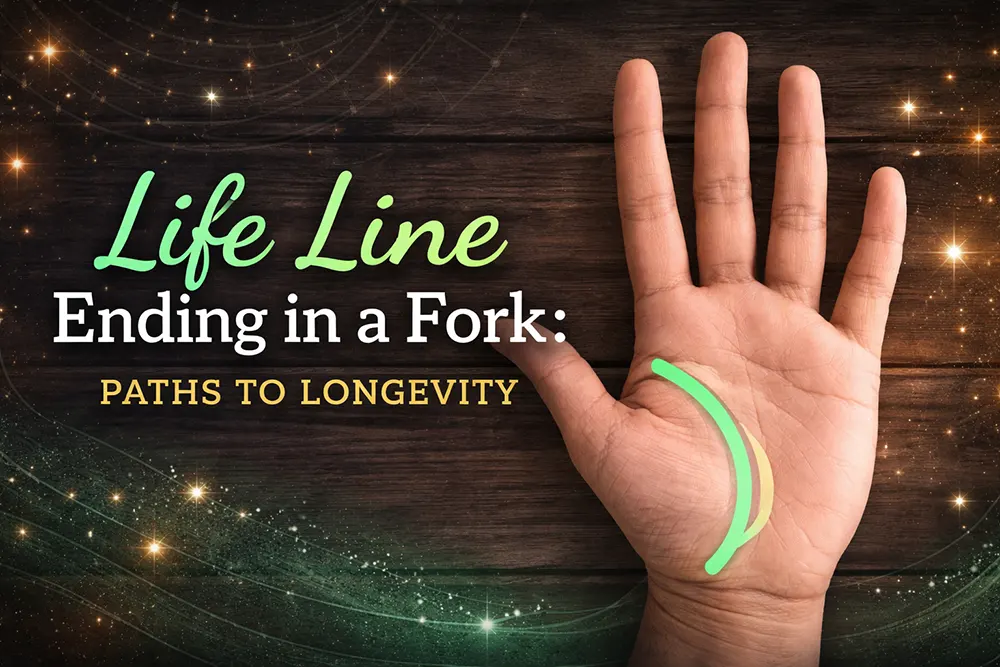
Imagine holding your hand under soft morning light, tracing the deep curve that arcs from the base of your thumb toward your wrist. That’s your life line—the ancient marker of vitality, energy, and the raw force that propels you through decades. But what if it doesn’t end in a gentle sweep? What if it splits, branching into two distinct paths like a river dividing around an island? A life line ending in a fork isn’t a flaw or a warning. It’s an invitation. In the language of palmistry, this forked life line signals dynamic potential: multiple routes to sustained energy, resilience, and a longer, more vibrant life.
This isn’t fortune-telling or rigid destiny. It’s a mirror reflecting your inner vitality and the choices that shape it. Across cultures and centuries, palm readers have seen the fork as a symbol of redirection, expanded possibilities, and the power to choose. Today, modern science echoes that wisdom. Your lifestyle can influence how your body expresses genes related to aging—turning the fork into a roadmap for longevity rather than a dead end. Whether your fork appears early, mid-line, or near the wrist, it points to a life rich with options. The stronger branch often leads toward home, stability, and rooted energy; the other may curve toward adventure, new environments, and fresh sources of vitality.
In this guide, we’ll explore exactly what a forked life line reveals about your energy and health. We’ll blend timeless palmistry insights with cutting-edge research on longevity. You’ll discover practical, evidence-based ways to strengthen whichever path you choose—so you don’t just live longer, but live with more joy, purpose, and boundless energy. If you’ve ever wondered why some people seem to glow with vitality well into their 90s while others fade earlier, the answer may lie right in the palm of your hand—and in the daily decisions that follow.
The Life Line in Palmistry: Your Blueprint for Vitality and Energy
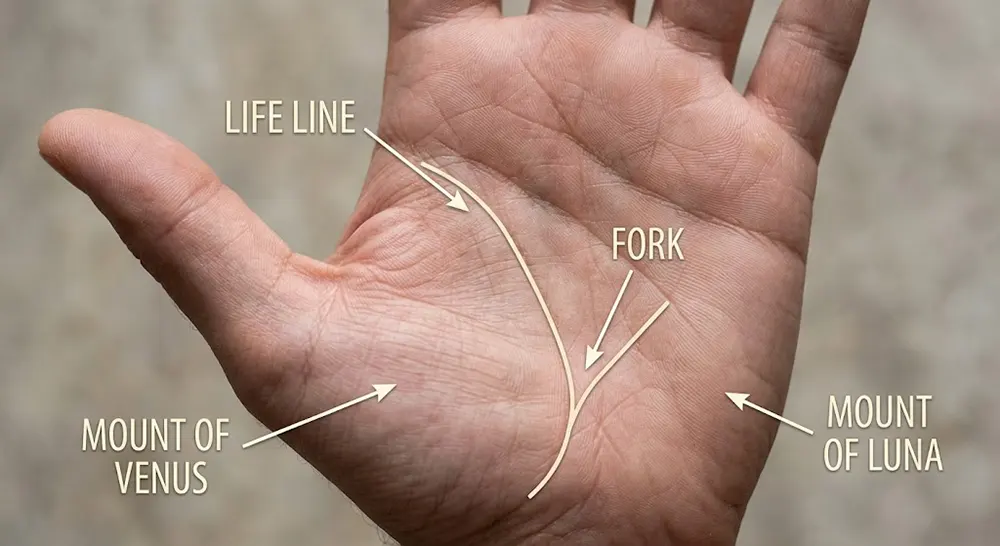
The life line is one of the most prominent and misunderstood markings on the hand. It doesn’t predict a fixed number of years; instead, it charts the quality of your life force—your physical stamina, emotional resilience, and overall zest for living. A deep, unbroken life line often suggests abundant energy reserves. A shallower or wavering one may reflect periods of stress or the need for greater self-care. But when that line ends in a fork, the story becomes even more compelling.
In traditional palmistry, the life line begins between the thumb and index finger and flows downward, encircling the base of the thumb (the Mount of Venus, seat of physical passion and endurance). Its length, depth, and clarity speak to how you manage life’s demands. A fork at the end—typically in the later third of the line—indicates a splitting of energies. One branch may angle toward the thumb, suggesting a return to familiar roots, family, or grounded routines. The other may drift toward the Mount of Luna (the fleshy area under the pinky), hinting at travel, creativity, emotional exploration, or life changes that pull you outward.
This isn’t random. Palmists across traditions—from ancient China to modern Western readers—interpret the forked life line as a sign of transition. It can mark a shift from one phase of life to another: perhaps leaving a high-stress career for something more fulfilling, relocating for better health, or simply awakening to new ways of nurturing your body and mind. The fork doesn’t shorten life; it multiplies possibilities. It suggests that your later years could be defined not by decline but by deliberate, energizing choices.
Think of it like a tree. The main trunk represents your core vitality. The fork is where the canopy opens, allowing more sunlight—more life—to reach every leaf. People with this marking often report feeling a surge of clarity or restlessness in midlife, prompting them to reassess habits that either drain or replenish their energy. It’s a built-in reminder that vitality isn’t passive. It’s cultivated.
What a Forked Life Line Reveals: Choices That Shape Longevity
A life line ending in a fork isn’t mysterious code—it’s practical guidance. Traditional interpretations highlight several themes that align beautifully with today’s understanding of healthy aging.
First, it often signals major life decisions in the second half of life. One path might represent continuity: staying close to home, deepening family bonds, and drawing energy from familiar rituals. The other might invite exploration—new cities, cultures, or even mindsets that refresh your spirit and body. Many palm readers note that the dominant branch (the clearer, deeper one) shows your natural inclination. Yet the presence of both reminds you that you can strengthen either through intention.
Second, the fork frequently points to themes of travel or relocation. Not necessarily globetrotting, but movement—physical, emotional, or environmental—that brings fresh air, new social connections, or stimulating experiences. Studies of long-lived populations consistently show that variety in daily movement and environment supports cardiovascular health and cognitive sharpness well into old age.
Third, it reflects expanded potential rather than limitation. Where some see a split in energy, others see abundance: your vitality isn’t confined to a single track. This aligns with the idea that humans thrive on adaptability. A forked life line encourages flexibility—the very quality linked to lower inflammation, better stress management, and slower cellular aging.
Importantly, palmistry has never claimed the life line measures exact lifespan. It measures life force. A fork simply says your force has options. You decide which branch grows stronger by how you live.
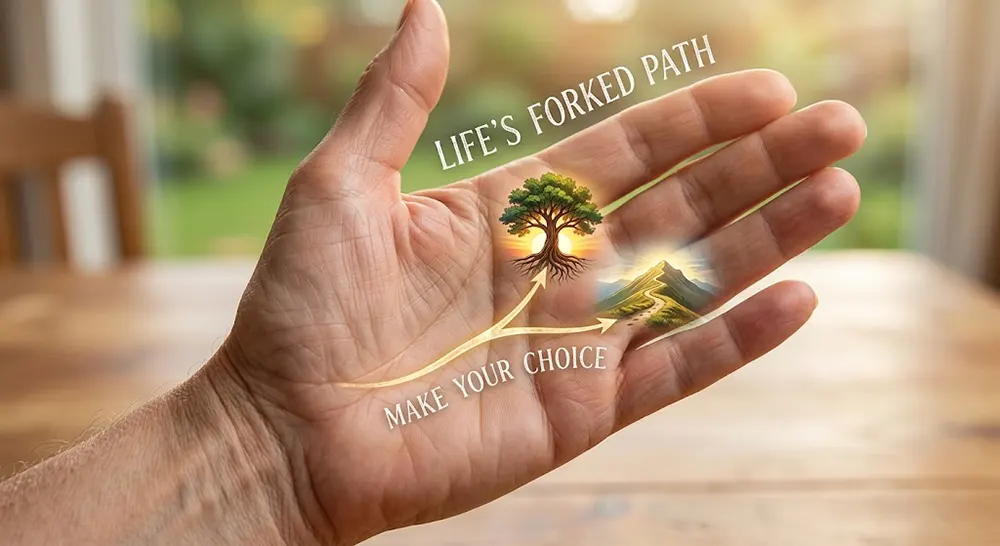
The Fork as Metaphor: Life’s Branching Paths to a Longer, Energized Future
Picture yourself at a literal fork in the road. One trail is well-trodden, safe, and familiar. The other winds through unknown terrain but promises richer views and unexpected discoveries. Your palm’s forked life line is that exact moment—only it’s happening internally, across decades.
Modern neuroscience and psychology support this metaphor. The brain’s neuroplasticity allows us to rewire habits at any age, much like choosing which branch of the life line to nourish. Epigenetics—the science of how environment and behavior influence gene expression—shows that lifestyle choices can literally switch on genes for longevity and switch off those linked to chronic disease. Your daily actions don’t just affect how you feel today; they shape the cellular story written in your DNA.
People with a forked life line often sense this crossroads intuitively. Maybe you’ve felt a quiet pull toward simpler living or a bold urge to reinvent yourself. That’s your palm speaking. The fork invites you to ask: Which path fuels my energy? Which one drains it? Longevity isn’t about avoiding the fork—it’s about walking it with awareness.
Science-Backed Paths: What Research Reveals About Choosing Longevity
Palmistry offers poetic insight; science offers proof. Decades of research on the world’s longest-lived populations—known as Blue Zones—confirm that longevity clusters around specific, repeatable habits. These aren’t extreme regimens. They’re gentle, sustainable choices that mirror the adaptability symbolized by a forked life line.
In regions like Okinawa, Sardinia, Nicoya, Icaria, and Loma Linda, people routinely reach 100 with remarkable vitality. Their “Power 9” principles, validated by independent peer-reviewed studies, include:
- Move naturally: Daily low-intensity activity woven into life—gardening, walking, housework—rather than intense gym sessions. This keeps circulation strong and inflammation low without burnout.
- Purpose: Having a clear reason to wake up each morning (called “ikigai” in Japan or “plan de vida” in Costa Rica) correlates with dramatically lower stress hormones and sharper minds.
- Downshift: Rituals to shed daily stress—naps, prayer, happy hour with friends—prevent the chronic cortisol that accelerates aging.
- 80% rule: Stopping eating when 80% full supports metabolic health and prevents the cellular damage of overeating.
- Plant slant: Diets centered on beans, greens, whole grains, and nuts, with minimal processed foods and meat.
- Wine at 5: Moderate social drinking (usually red wine with friends) for its antioxidants and community bonding.
- Belong: Participation in faith-based or community groups adds years by combating loneliness.
- Loved ones first: Prioritizing family and close relationships creates a safety net that buffers against illness.
- Right tribe: Surrounding yourself with people who support healthy behaviors.
These habits don’t require perfect genetics. They work because they influence epigenetics—turning longevity genes “on” through consistent, joyful living. A forked life line reminds you that you have two (or more) viable routes to apply these principles. One branch might mean deepening community at home. The other might mean relocating to a walkable, nature-rich environment. Both can lead to exceptional vitality.
Recent independent research has reaffirmed the accuracy of Blue Zones data, showing that these patterns hold up under rigorous scrutiny. Your palm’s fork is an ancient nudge toward the same truth: longevity is 80% lifestyle.

Practical Strategies: 8 Ways to Energize Your Forked Life Line Path
Knowledge alone doesn’t extend life—action does. Here are eight unique, actionable strategies tailored to someone with a life line ending in a fork. Each strengthens vitality while honoring the theme of choice.
- Map Your Personal Fork Daily Every morning, spend two minutes journaling: “Which branch am I feeding today—stability or adventure?” Rate your energy on a scale of 1–10. Over time, patterns emerge, showing which habits truly sustain you.
- The Vitality Fork Meditation Sit quietly, close your eyes, and visualize your life line glowing. See the fork clearly. Breathe into the stronger branch while silently affirming: “I choose energy, resilience, and joy.” Practice for 10 minutes daily. Many report clearer focus and reduced anxiety within weeks—effects backed by mindfulness studies on telomere protection (the caps on chromosomes that shorten with age).
- Branch-Specific Movement Plans If your dominant fork leans homeward, build a routine of garden walks or family hikes. If it leans outward, try new classes—yoga, dance, or hiking trails. Alternate both to keep energy balanced.
- Nutritional Branching Experiment with two weekly “fork meals”: one rooted (hearty bean stew with greens) and one exploratory (Okinawan-inspired sweet potato and tofu stir-fry). Track how each affects your afternoon energy. This playful approach prevents dietary boredom while delivering anti-inflammatory benefits.
- Social Fork Networking Cultivate two circles: a close-knit “home branch” group for deep support and an “adventure branch” network for fresh ideas and travel buddies. Research shows diverse social ties boost immune function and cognitive reserve.
- Stress-Reduction Forks Create two go-to rituals—one calming (evening tea and gratitude list) and one invigorating (short nature walk at sunset). Rotate them to match your energy needs.
- Purpose Reassessment at the Fork Every six months, revisit your “why.” Write a one-page vision for the next decade that honors both branches. People who regularly align actions with purpose show measurably lower rates of heart disease and depression.
- Sleep and Recovery Branching Design two bedtime routines—one for winding down at home (reading, herbal tea) and one for travel or change (portable white-noise machine, consistent wind-down playlist). Quality sleep of 7–9 hours nightly is one of the strongest predictors of longevity.
Implement even three of these consistently, and you’ll notice sharper mental clarity, steadier energy, and a deeper sense of control over your health.
Overcoming Common Obstacles on the Longevity Path
No journey is without bumps. A forked life line may coincide with periods of uncertainty—career pivots, health scares, or family changes. View these as tests of which branch you’ll strengthen. Common obstacles include:
- Decision paralysis: Counter it with small experiments. Test one habit from each “branch” for 30 days and measure results.
- Energy drains: Identify them through a simple audit—screen time, toxic relationships, poor sleep. Replace one per week.
- Doubt about palmistry: Remember, the fork is a metaphor, not magic. Its power lies in prompting reflection that science already validates.
Persistence matters more than perfection. Many who embrace their forked life line describe a profound shift: from passive aging to active thriving.
Frequently Asked Questions About a Forked Life Line and Longevity
Does a life line ending in a fork mean I will live longer? Not automatically. It indicates abundant choices for directing your vitality. Longevity emerges from how you respond to those choices—through diet, movement, purpose, and connection.
Can the life line change over time? Yes. Hands evolve with life experiences. Consistent healthy habits can deepen lines, clarify forks, and even strengthen weaker branches, reflecting improved energy flow.
What if my fork is faint or one branch is much stronger? A dominant branch simply shows your current natural path. You can intentionally nurture the other through new habits. Faint lines often gain definition as vitality improves.
Is palmistry scientific? Palmistry offers symbolic guidance rooted in observation and tradition. Its real value lies in sparking self-awareness that aligns with proven longevity science.
What about short life lines or breaks? These highlight areas needing extra care, not fixed outcomes. Many with short or broken lines live long, vibrant lives by addressing stress and building resilience.
How do I read my own palm accurately? Use good lighting, relax your hand, and trace the line gently. Focus on overall patterns rather than single marks. For deeper insight, consult an experienced reader alongside your own intuition.
Can I strengthen my life line through lifestyle alone? Absolutely. Exercise, nutrition, stress management, and social bonds have been shown to enhance cellular health markers linked to the vitality the life line represents.
Your Fork, Your Future: A Meaningful Close
A life line ending in a fork is not a prediction—it’s a promise. It promises that your later years can be your most energized, purposeful, and joyful. Ancient palm readers saw the split as expanded potential. Modern science confirms the same truth through Blue Zones research and epigenetics: you hold the power to shape your vitality.
Look at your palm again. That fork isn’t a complication. It’s an open door. Choose the branch that lights you up. Nurture it daily with movement, nourishment, connection, and meaning. Surround yourself with people who energize you. Move your body as nature intended. Eat mostly plants, sleep deeply, and wake with purpose.
The path to longevity isn’t a single straight line—it’s a fork you navigate with courage and curiosity. By honoring both branches and committing to habits that science and wisdom both endorse, you transform potential into reality. You don’t just add years to your life. You add life to your years—vibrant, energetic, and deeply fulfilling.
Related Posts
The Influence of Mounts on Life Line Strength in Palmistry: Unlocking Your Vitality Blueprint
Sun Line and Wealth: How Your Palm’s Apollo Line Reveals Financial Creativity
Partial Sun Line in Palmistry: Emerging Talent and Recognition
Famous Personalities with Strong Fate Lines
Faint Fate Line in Palmistry: What It Reveals About Gradual Career Development and Your Destiny
Chained Heart Line: Emotional Vulnerabilities Revealed