
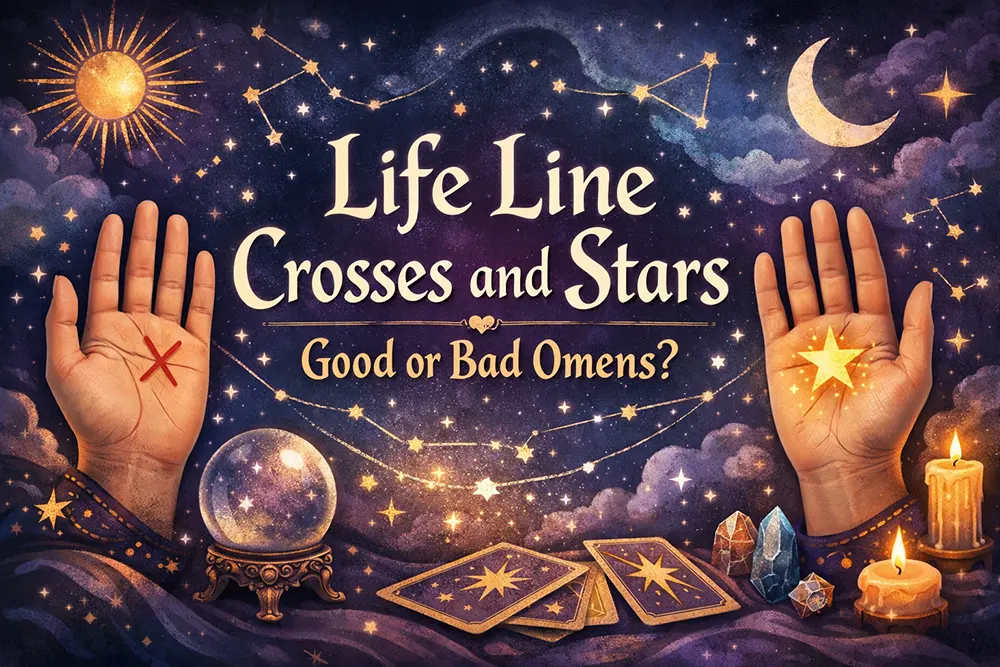
In the fascinating world of palmistry, the life line stands out as one of the most intriguing features on your hand. Often misunderstood as a predictor of lifespan, the life line in palmistry actually reveals insights into your vitality, major life changes, and overall energy flow. But what happens when mysterious markings like crosses or stars appear on this vital line? Are they harbingers of doom, or could they signal unexpected opportunities? In this comprehensive guide, we’ll dive deep into the life line in palmistry, exploring the meanings of crosses and stars, and whether they’re good or bad omens. Drawing from ancient traditions blended with modern perspectives, we’ll uncover how these symbols can guide personal growth and self-awareness.
Palmistry, also known as chiromancy, has been practiced for thousands of years across cultures, from ancient India and China to Europe during the Renaissance. Today, it’s not just about fortune-telling; it’s a tool for introspection, helping people understand their inner strengths and potential challenges. If you’ve ever glanced at your palm and wondered about that curving line around your thumb, you’re in the right place. We’ll break down the life line in palmistry step by step, adding unique insights like psychological correlations and real-world applications to make this ancient art relevant for today’s fast-paced life.
What Is the Life Line in Palmistry?
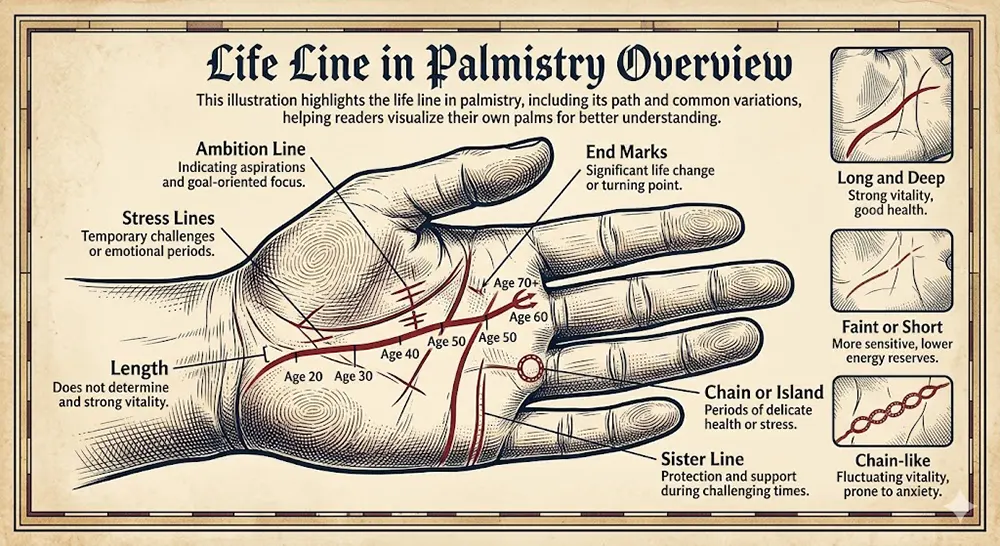
The life line in palmistry is the curved crease that starts between your thumb and index finger, arching down toward the wrist. Contrary to popular myths, it doesn’t dictate how long you’ll live—modern palmists emphasize that it’s more about the quality of life, your resilience, and key transitions. A strong, deep life line suggests robust health and a zest for adventure, while a faint or broken one might indicate periods of fatigue or significant shifts.
To read the life line effectively, consider its length, depth, and curvature. A long life line in palmistry often points to endurance and the ability to bounce back from setbacks. If it’s short, it could mean you’re pragmatic and focused on the present rather than long-term planning. Curvature matters too: a wide arc suggests an outgoing personality, while a straighter path hints at caution and introspection.
In traditional palmistry, the life line is divided into sections representing different life stages. The upper part (near the start) covers childhood and early adulthood, the middle reflects midlife, and the lower end signifies later years. Markings like branches or islands along the way add layers of meaning. For instance, upward branches might indicate positive changes, such as career advancements or new relationships, while downward ones could signal energy drains or health concerns.
But why focus on the life line in palmistry? Because it’s the foundation of your hand’s story. It interacts with other major lines—like the head line (for intellect) and heart line (for emotions)—creating a holistic picture. In our modern take, think of it as your personal energy meter: high vitality means you’re ready to tackle challenges, low might prompt self-care routines like mindfulness or exercise.
Decoding Crosses on the Life Line: Obstacles or Opportunities?
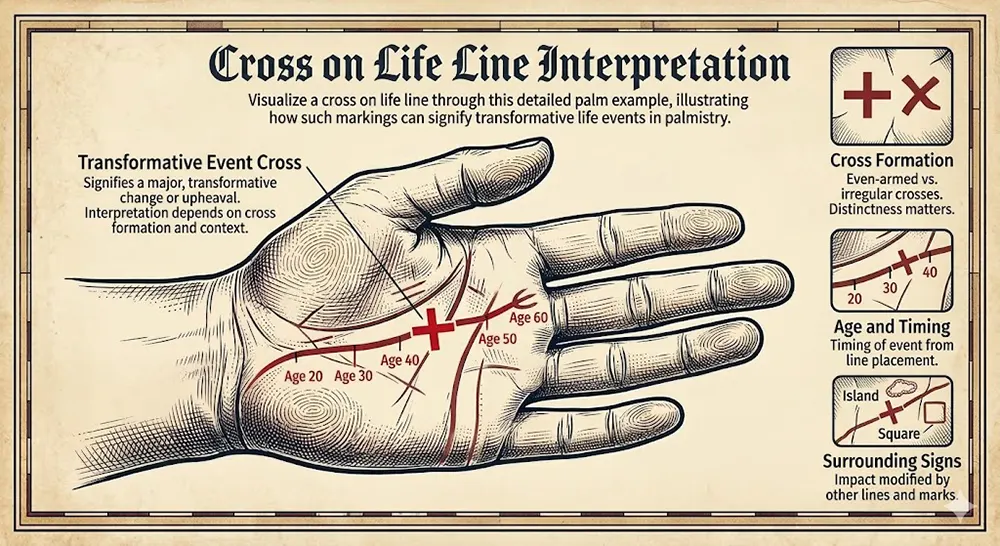
One of the most common markings is a cross on the life line, which appears as two intersecting lines forming an ‘X’ shape. In palmistry, a cross on life line often symbolizes disruptions or pivotal moments. But is it always a bad omen? Not necessarily—the context, position, and clarity determine its impact.
If a cross appears early on the life line in palmistry, it might reflect childhood challenges, such as family issues or early health scares that build character. In the middle section, it could indicate midlife crises, like job loss or relationship strains, but these often lead to growth. A cross near the end might suggest late-life reflections or unexpected events that prompt wisdom-sharing.
Traditional interpretations view a cross on life line as a warning of obstacles, potentially accidents or setbacks. However, in a positive light, it can represent crossroads where decisions shape destiny. For example, if the cross is clear and not too deep, it might signal a beneficial change, like relocating for a dream job. If it’s faint or accompanied by upward branches, it could even denote protection from harm.
Adding a unique twist: Let’s connect this to psychology. A cross on life line might mirror “turning points” in cognitive behavioral therapy, where challenges foster resilience. Imagine someone with this marking—they might excel in high-stakes professions like entrepreneurship, turning “crosses” into ladders for success. Real-value tip: If you spot a cross on your life line, journal about past hurdles; it could reveal patterns for future avoidance.
Crosses aren’t isolated; they interact with nearby lines. If a cross touches the fate line, it might affect career paths, suggesting professional pivots. In contrast, one near the heart line could influence emotional bonds. To optimize your reading, examine both hands—the dominant one shows current life, the other innate potential.
The Mystery of Stars on the Life Line: Bursts of Energy or Warnings?
Stars on the life line are rarer and more dramatic, formed by three or more short lines intersecting like a burst. In palmistry, a star on life line typically indicates sudden events—good or bad—depending on placement and hand context.
A star at the beginning of the life line in palmistry might point to an explosive start in life, perhaps a talented childhood or early fame. In the middle, it could mean a breakthrough, like a lottery win or innovative idea paying off. Near the end, it suggests a legacy-defining moment, such as mentoring others or achieving lifelong goals.
Traditionally, stars are seen as omens of intensity. A star on life line might warn of accidents or health spikes if it’s on a weak line, but on a strong one, it promises success and recognition. For instance, historical figures like inventors often had such markings, symbolizing “eureka” moments.
Here’s an original idea: View stars as “energy vortices” in a quantum-inspired palmistry lens. They could represent alignment with universal forces, where sudden changes propel personal evolution. Practically, if you have a star on your life line, harness it by setting intentions during full moons or using affirmations to channel positive outcomes.
Compare stars and crosses: While crosses denote steady challenges, stars bring abrupt shifts. Both can be omens, but stars amplify energy. In blended readings, a star near a cross might indicate overcoming obstacles with flair, leading to triumphs.
Good or Bad Omens? Contextual Factors in Life Line Markings
The big question: Are crosses and stars on the life line good or bad omens? The answer lies in nuance. In palmistry, no marking is inherently negative; it’s about the whole hand.
Factors influencing interpretation:
- Depth and Clarity: Deep crosses or stars suggest strong impacts, while faint ones are milder.
- Position: Early crosses might build toughness; late stars could mean rewarding retirements.
- Hand Type: On an earth hand (square palm, short fingers), markings indicate practical challenges. On a water hand (oval palm, long fingers), they tie to emotions.
- Other Lines: If the head line crosses the life line with a star, it might signal intellectual breakthroughs amid turmoil.
Unique perspective: Integrate numerology. Count the lines in a star—if even, it’s balanced luck; odd, adventurous risks. This adds a layer for personalized readings.
Value-added advice: Use these omens for empowerment. Spot a cross? Prepare contingency plans. See a star? Pursue passions boldly. Palmistry isn’t fate—it’s a map for navigation.
Modern Twists: Psychological and Cultural Insights on Life Line Markings
Beyond tradition, let’s innovate. Psychologically, the life line in palmistry aligns with Maslow’s hierarchy—basic vitality at the base, self-actualization higher up. Crosses might represent “growth edges,” where discomfort leads to breakthroughs, akin to therapy sessions.
Culturally, in Vedic palmistry, crosses on life line link to karma, suggesting past-life lessons. In Western views, they’re decision points. A fresh idea: Blend with biofeedback—track how palm changes (lines can evolve) correlate with stress levels via apps.
Case study (hypothetical): Sarah, 35, had a mid-life cross on her life line. Interpreting it as a career shift omen, she quit her job for freelancing, turning potential “bad” into prosperity. Another: Tom’s star led him to invent a gadget, channeling sudden energy positively.
These stories show real value: Palmistry fosters proactive living.
Frequently Asked Questions About Life Line in Palmistry
What does a broken life line mean?
A broken life line in palmistry often indicates major changes or interruptions, but overlaps suggest recovery and strength.
Is a short life line bad?
No, a short life line means focused energy, not short life. It highlights living in the moment.
Can crosses on life line predict accidents?
They can warn of potential risks, but with awareness, you can mitigate them through caution.
What if I have multiple stars on my life line?
Multiple stars suggest a dynamic life with highs and lows—embrace the excitement for growth.
How do I read crosses and stars on both hands?
The dominant hand shows current path; the other, potentials. Differences highlight choices.
Does the life line change over time?
Yes, lines can deepen or fade with life experiences, reflecting personal development.
Conclusion: Embracing the Omens in Your Palm
The life line in palmistry, with its crosses and stars, isn’t about fearing omens but understanding life’s rhythms. Whether good or bad, these markings remind us that challenges build resilience and bursts of energy propel us forward. By viewing them through a lens of empowerment—blending ancient wisdom with modern psychology—you gain tools for a richer life. Remember, your palm is a mirror of your journey; use it to navigate with confidence. Next time you look at your hand, see not just lines, but possibilities. Palmistry invites curiosity—may your omens always lead to enlightenment.
Related Posts
The Influence of Mounts on Life Line Strength in Palmistry: Unlocking Your Vitality Blueprint
Sun Line and Wealth: How Your Palm’s Apollo Line Reveals Financial Creativity
Life Line Ending in a Fork: Paths to Longevity
Partial Sun Line in Palmistry: Emerging Talent and Recognition
Famous Personalities with Strong Fate Lines
Faint Fate Line in Palmistry: What It Reveals About Gradual Career Development and Your Destiny