
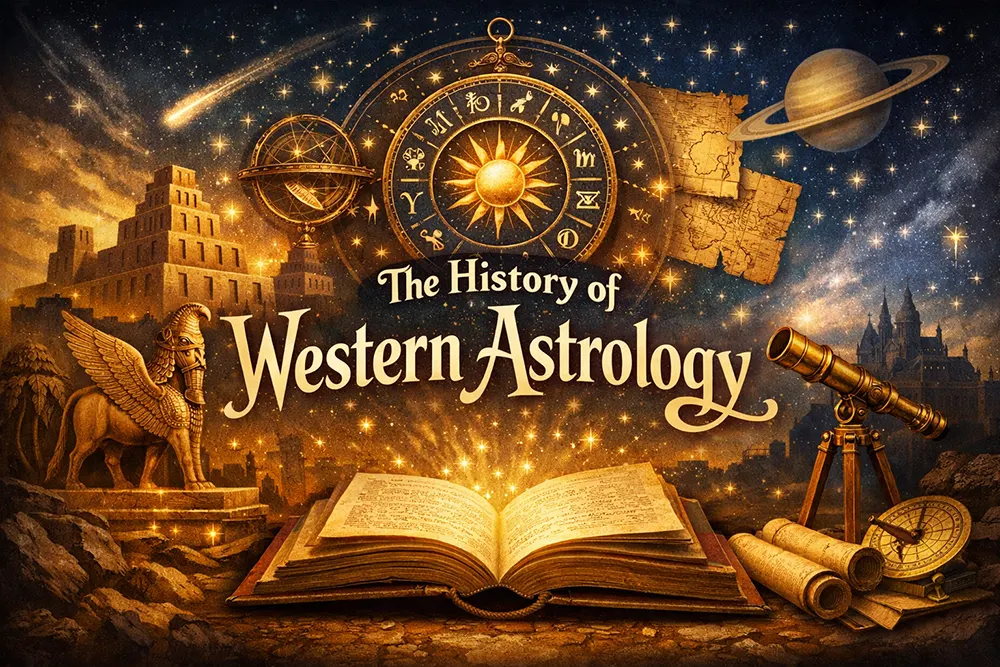
In an era when apps ping daily horoscopes and millions scroll zodiac compatibility charts before swiping right, the history of Western astrology feels more alive than ever. Yet few realize this celestial tradition stretches back over 4,000 years—beginning not in crystal shops or TikTok lives, but in the mud-brick observatories of ancient Babylon.
This comprehensive guide traces the history of Western astrology from its Babylonian roots through Greek innovation, Roman adoption, medieval survival, Renaissance revival, and into today’s psychological and digital renaissance. You’ll discover how a system of divine omens evolved into the personalized birth charts we consult in 2026, why it survived church bans and scientific skepticism, and what timeless lessons it offers our fast-paced world.
Whether you’re a seasoned astrologer, curious skeptic, or simply someone who wonders why Mercury retrograde still wrecks your inbox, this deep dive delivers real value: accurate history, fresh insights, and practical takeaways that deepen your appreciation for the stars. Let’s journey through the history of Western astrology—one epoch at a time.
The Babylonian Foundations: Where Celestial Omens Were Born (c. 1800 BCE onward)
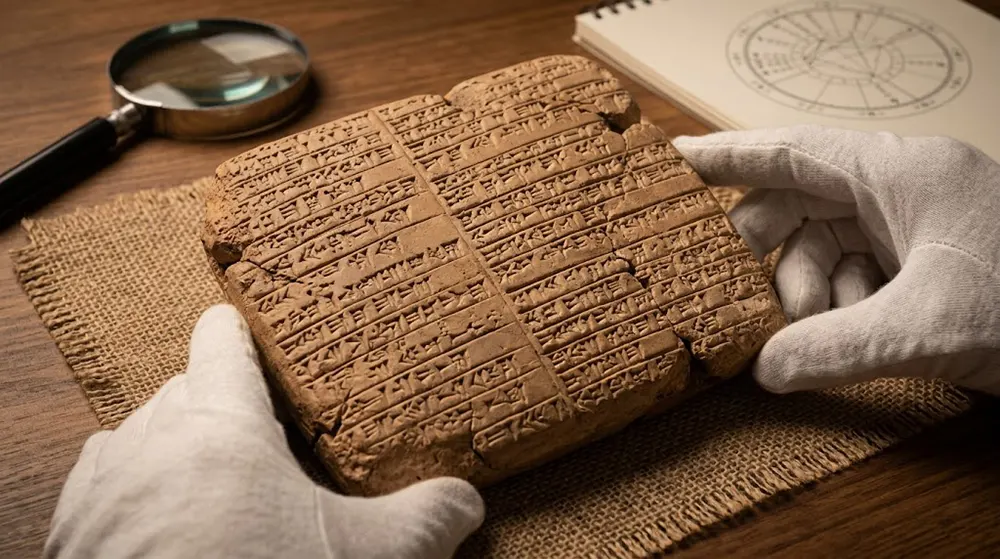
The history of Western astrology officially begins in Mesopotamia. Around 1800 BCE, Babylonian scribes compiled the Enuma Anu Enlil—70 cuneiform tablets holding nearly 7,000 omens linking sky events to earthly outcomes. A lunar eclipse didn’t just darken the night; it warned of a king’s potential downfall, prompting rituals like “substitute kings” to trick the gods.
This wasn’t personal horoscopy yet. Babylonian astrology was mundane—focused on kings, harvests, and wars. Planets carried divine personalities: Venus as Ishtar (love and war), Jupiter as Marduk (kingship). By the 4th century BCE, Babylonian astronomers had perfected mathematical ephemerides, predicting planetary positions with astonishing accuracy.
Unique Insight: The zodiac we use today—12 equal 30-degree signs—was a Babylonian invention born from their need to track the Sun’s annual path against fixed stars. They also established exaltations (planets strongest in certain signs) and triplicities (fire, earth, air, water groupings) that still shape modern interpretations.
Imagine priests on ziggurats scanning the sky, recording every omen on clay. That meticulous record-keeping became the DNA of the history of Western astrology.
Hellenistic Revolution: The Birth of Horoscopic Astrology in Alexandria
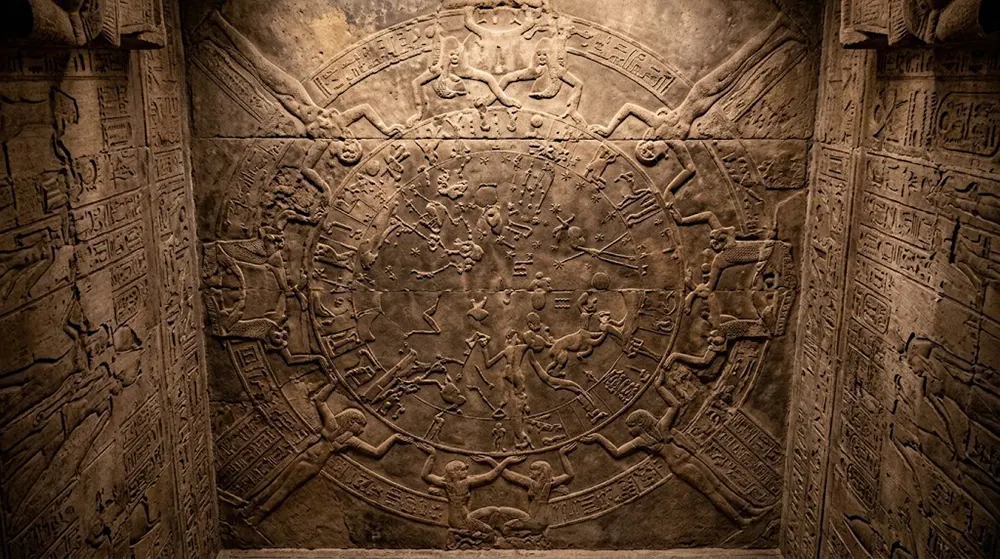
After Alexander the Great conquered Babylon in 331 BCE, Greek scholars carried home Babylonian techniques. In Ptolemaic Egypt, especially Alexandria, the fusion exploded. Egyptian decans (36 ten-degree star segments) merged with the Babylonian 12-sign zodiac, creating the first true horoscopic astrology—charts cast for the exact moment of birth.
The star of this era is Claudius Ptolemy (2nd century CE), whose Tetrabiblos remains the bible of Western astrology. Ptolemy systematized planets, signs, houses, and aspects. He introduced the tropical zodiac—tied to Earth’s seasons rather than fixed stars—still used in Western practice today.
Creative Addition for Modern Readers: Think of Hellenistic astrologers as the first “data scientists” of the soul. They didn’t just predict events; they mapped the psyche’s blueprint. This shift from state omens to individual destiny is the single most transformative moment in the history of Western astrology.
Roman Adoption: Stars, Emperors, and Everyday Life
Rome embraced astrology with typical pragmatism—then tried to control it. Emperors Augustus and Tiberius kept personal astrologers (Thrasyllus advised Tiberius from exile). Yet the Senate periodically banished “Chaldeans” fearing political manipulation.
Roman astrologers adapted Greek techniques for daily use: electional astrology (choosing auspicious dates for battles or weddings) and medical astrology (timing surgeries by lunar phase). Cicero mocked it in De Divinatione, yet even he admitted its cultural grip.
Unique Angle: Roman astrology democratized the stars. While Babylonian priests served kings, Roman practitioners served soldiers, merchants, and lovers—planting seeds for today’s accessible sun-sign culture.
Medieval Survival: Islamic Golden Age and the European Revival
When Rome fell and the Western Church condemned astrology as pagan, the history of Western astrology nearly vanished—until the Islamic Golden Age rescued it. In 9th-century Baghdad, scholars like Albumasar translated and expanded Ptolemy. Their works reached Europe via 12th-century Spain.
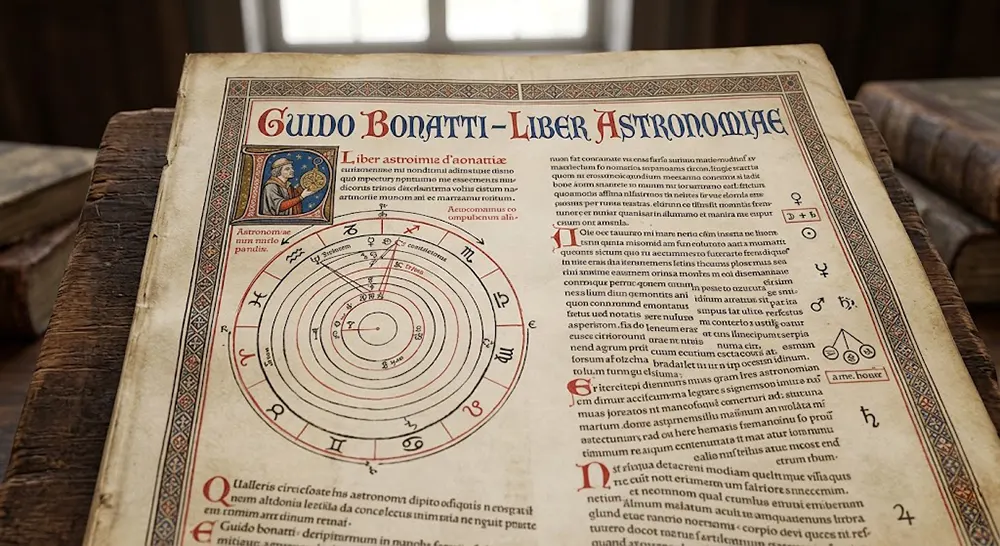
Guido Bonatti (13th century) became Europe’s most famous medieval astrologer, advising popes and princes. Universities taught astrology alongside medicine; surgeons checked lunar phases before operating. Even Dante placed Bonatti in Hell in the Divine Comedy—proof of its controversial power.
Fresh Insight: Medieval astrology wasn’t “superstition.” It was applied science. Rulers used it for governance; physicians for healing. This practical integration explains why the tradition survived centuries of theological attack.
Renaissance and Scientific Tension: Astrology Meets the New Cosmos
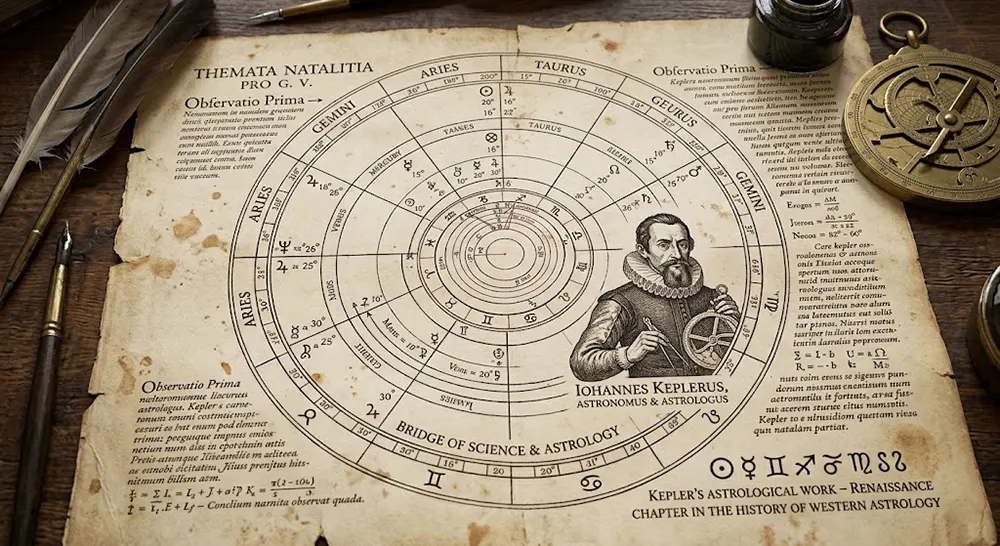
The Renaissance was astrology’s golden age and its greatest crisis. Tycho Brahe, Johannes Kepler, and even Galileo cast charts while advancing astronomy. Shakespeare wove planetary references into plays; Queen Elizabeth I consulted John Dee.
Yet Copernicus’s heliocentrism and Newton’s mechanics shattered the geocentric worldview that astrology assumed. By the late 17th century, astrology lost university status—though it never disappeared from private practice.
Creative Take: The Renaissance astrologer was a true Renaissance man: part scientist, part mystic, part political advisor. Their struggle to reconcile faith and reason mirrors today’s debates about intuition versus data.
The Modern Era: Psychological Astrology, Pop Culture, and Digital Revival (18th Century–2026)
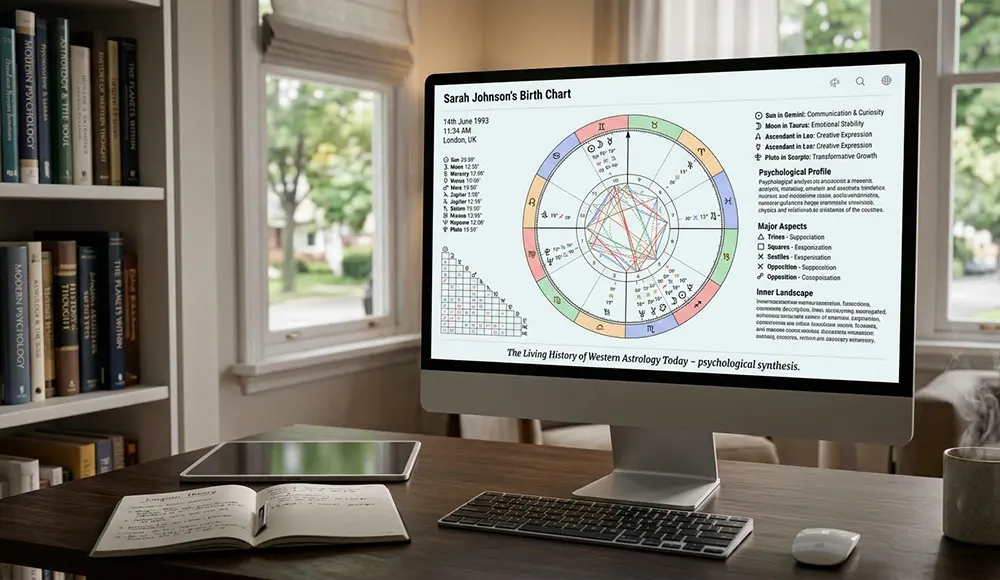
The Enlightenment labeled astrology pseudoscience, yet it roared back in the 20th century. Alan Leo (late 1800s) popularized psychological astrology—focusing on character over prediction. Carl Jung used it in therapy, calling planets “archetypes of the collective unconscious.”
Newspaper sun-sign columns (1930s onward) made astrology mainstream. Today, apps like Co-Star and The Pattern deliver personalized charts instantly. In 2026, with major outer-planet shifts (Pluto in Aquarius, Neptune in Aries), interest surges as people seek meaning amid rapid change.
Unique Modern Insight: Western astrology has evolved into a therapeutic tool rather than fatalistic prophecy. It helps users recognize patterns, embrace shadow work, and navigate transits with intention—turning ancient omens into modern empowerment.
Frequently Asked Questions About the History of Western Astrology
When did the history of Western astrology actually begin?
The organized system started in Babylon around 1800 BCE with the Enuma Anu Enlil. Horoscopic (personal) astrology emerged in Hellenistic Egypt around 300 BCE.
How is Western astrology different from Vedic astrology?
Western uses the tropical zodiac (season-based) and focuses more on psychological growth. Vedic (sidereal) aligns with actual constellations and emphasizes karma and remedial measures.
Did the Church really ban astrology?
Yes—repeatedly—yet many clergy and popes secretly consulted astrologers. The tension between faith and stars runs throughout the medieval chapter of the history of Western astrology.
Why do we still use Babylonian signs if the constellations have shifted?
Precession of the equinoxes caused the mismatch. Western astrology stayed loyal to the tropical system (seasons and equinoxes) rather than fixed stars.
Is there scientific evidence supporting the history of Western astrology?
No empirical proof exists for predictive accuracy. However, its enduring cultural and psychological value—recognized by thinkers like Jung—explains its survival.
How has technology changed the practice of Western astrology?
From clay tablets to AI-generated charts in seconds, technology has made the ancient art instantly accessible while preserving core techniques.
What can the history of Western astrology teach us in 2026?
That humanity’s relationship with the cosmos is cyclical. Major planetary transits remind us to adapt, reflect, and find meaning—exactly as Babylonians did millennia ago.
Conclusion: The Timeless Mirror of the Stars
The history of Western astrology is not merely a timeline of techniques and texts. It is humanity’s longest-running conversation with the universe—a dialogue that began on Babylonian rooftops and continues in your smartphone today.
Through conquests, dark ages, scientific revolutions, and digital explosions, Western astrology has proven remarkably resilient. It adapted, survived, and evolved because it answers a fundamental human need: to feel connected to something larger than ourselves.
In 2026 and beyond, whether you use it for self-awareness, timing decisions, or pure wonder, remember this rich legacy. The stars that guided ancient kings now guide you. The history of Western astrology isn’t just past—it lives in every chart you cast and every insight you gain.
Look up tonight. The same sky that inspired Babylon still whispers its ancient wisdom. The journey from Babylon to today is your journey too.
Related Posts
The Fire Element in Astrology: Igniting Passion, Leadership, and Transformation in Your Zodiac Chart
Astrology for Beginners: Key Terms You Need to Know
Astrology vs Astronomy: Unraveling the Cosmos Through Science and Belief
Birth Chart: Unlocking the Secrets of Natal Astrology
Debunking Astrology Myths: Separating Fact from Fiction in the Stars
How Astrology Influences Your Daily Life: A Simple Explanation