
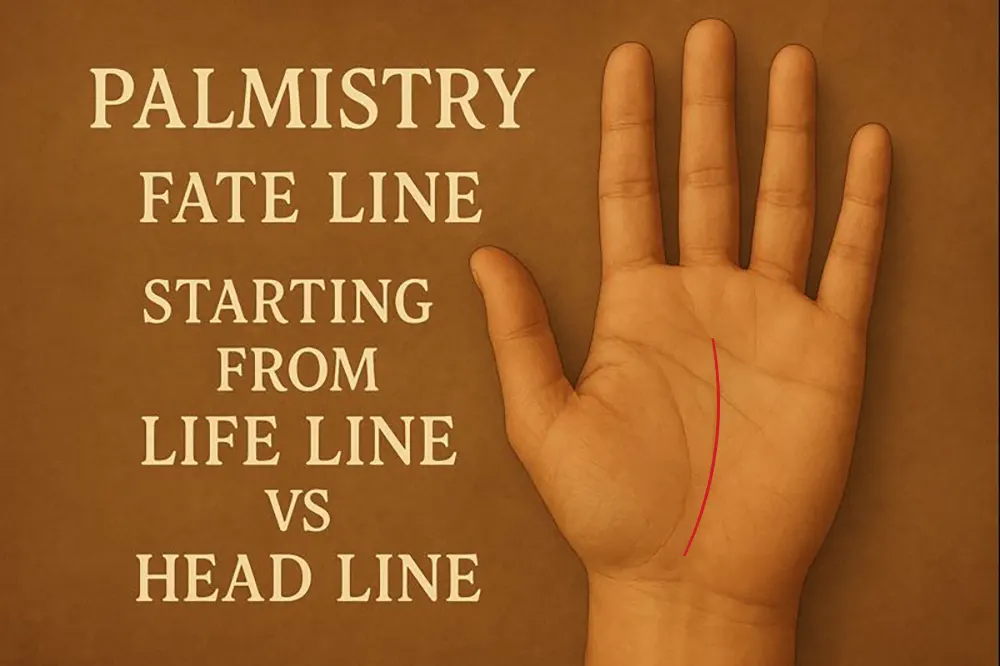
In the ancient art of palmistry, also known as chiromancy, the lines etched on our palms are believed to hold the blueprint of our lives. Among these, the fate line in palmistry stands out as a profound indicator of one’s career path, destiny, and the twists of fortune that shape our journey. Often referred to as the line of destiny or career line, it runs vertically from the base of the palm toward the middle finger, symbolizing how external forces, personal efforts, and life events converge to influence our professional success and overall life direction. But what happens when this enigmatic line originates from different points on the hand? Specifically, the fate line starting from life line vs head line reveals fascinating insights into how early influences versus intellectual decisions mold our futures.
As a seasoned palmist and astrologer, I’ve spent years decoding these subtle markings for countless individuals seeking clarity on their paths. In this comprehensive guide, we’ll delve deep into the nuances of the fate line in palmistry, exploring its meanings, variations, and the critical differences between origins from the life line and the head line. Whether you’re a curious beginner or a dedicated enthusiast, this exploration will empower you to read your own palm or others’ with confidence. We’ll cover historical contexts, detailed interpretations, real-life examples, common questions, and practical tips—all optimized to help you understand how this line can guide your career and destiny decisions.
The Foundations of Palmistry: Why the Fate Line Matters
Palmistry has roots tracing back over 5,000 years, with origins in ancient India, China, and Egypt. It was popularized in the West during the Renaissance, thanks to scholars like Aristotle, who reportedly used it to assess character. In modern times, palmistry blends mysticism with psychology, offering insights into personality, health, relationships, and—most relevant here—career trajectories. The fate line in palmistry is not present on every hand; its absence or presence alone speaks volumes. When it appears, it acts as a timeline of ambition, obstacles, and triumphs.
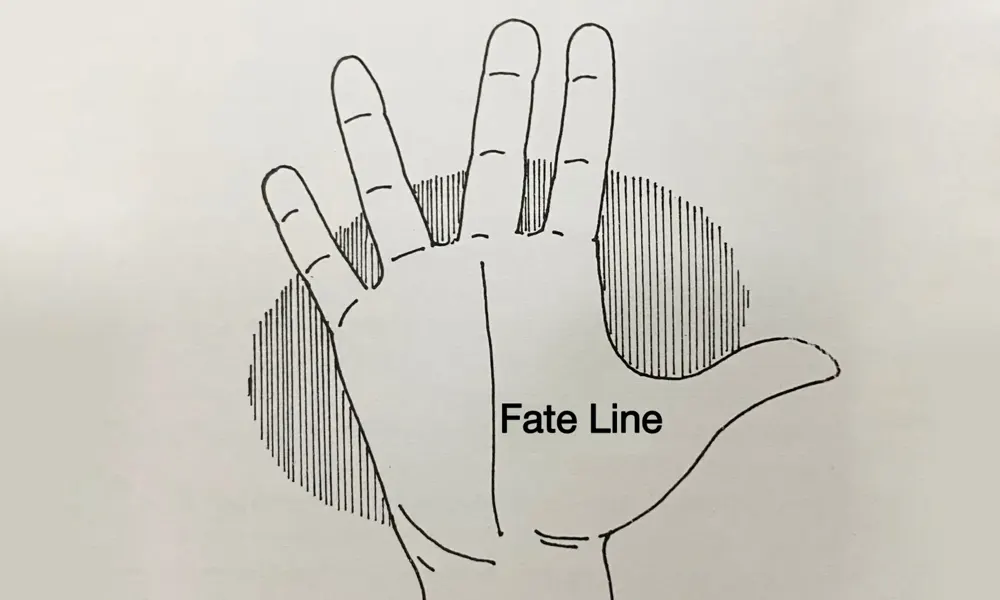
Unlike the heart line (emotions) or head line (intellect), the fate line focuses on external circumstances and how they intersect with personal will. It’s often called the “Saturn line” in Vedic palmistry, named after the planet of discipline and karma. A strong, unbroken fate line suggests a smooth path to success, while breaks or forks indicate changes, perhaps job shifts or life pivots. But the starting point is crucial— it sets the tone for how destiny unfolds.
Consider this: Your palm is a map, and the fate line is the highway leading to your goals. If it starts low near the wrist, it might imply a predestined path; higher up, it could mean self-made fortune. In our focus today, comparing the fate line starting from life line vs head line highlights a core dichotomy: nurture versus intellect, family roots versus mental prowess.
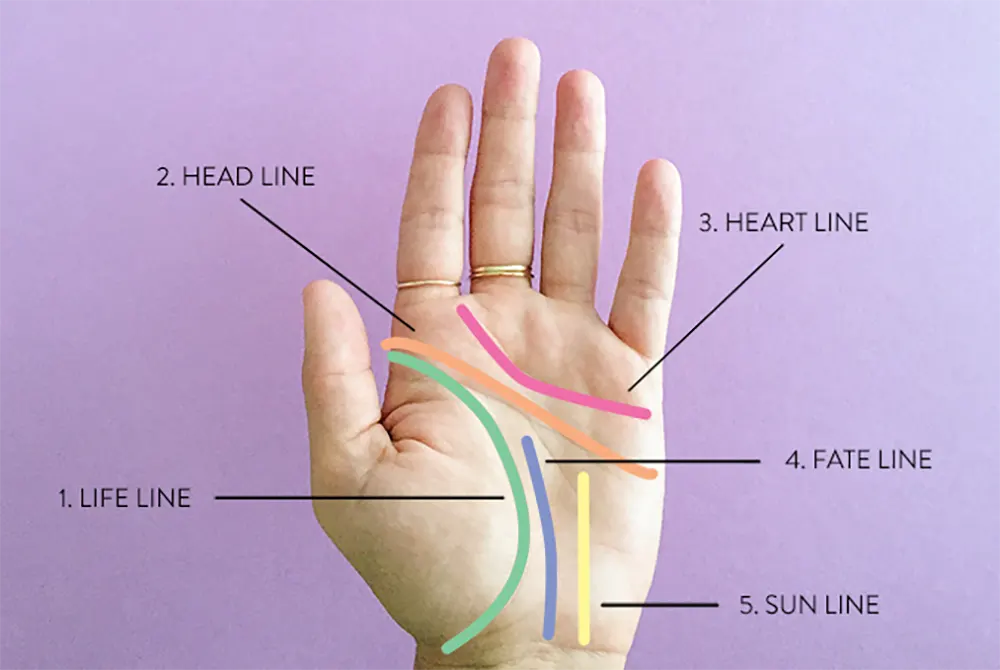
To build a solid foundation, let’s first identify the major lines:
- Life Line: Curves around the thumb, representing vitality, health, and major life changes.
- Head Line: Horizontal across the middle, denoting intellect, decision-making, and mental health.
- Heart Line: Top horizontal, governing emotions and relationships.
- Fate Line: Vertical, intersecting these, symbolizing career and luck.
A clear understanding of these interactions is essential for accurate readings. For instance, if the fate line merges with others, it amplifies their influences.
Decoding the Fate Line Starting from the Life Line
When the fate line in palmistry originates from the life line, it’s a sign that your early years and family background play a pivotal role in shaping your career and destiny. This configuration is common among individuals who draw strength from their roots—think of entrepreneurs who build upon family businesses or artists inspired by childhood experiences.
Meaning and Interpretations
In traditional palmistry, this starting point indicates that success is often “self-earned through hard work rather than inherited wealth.” Your upbringing, parental guidance, and early challenges forge your path. For example:
- Early Influence: The juncture point on the life line can be timed—lower means childhood impacts (ages 0-20), mid-point suggests teenage or early adult influences (20-35).
- Energy and Determination: Such individuals are described as “full of immense energy,” channeling family dynamics into professional drive. If the fate line is deep and straight, it predicts steady career growth, perhaps in fields like education, healthcare, or family-owned enterprises.
- Potential Challenges: A faint or broken line here might signal conflicts with family expectations, leading to a rebellious pursuit of personal goals. Historical texts like those from Cheiro (a famous 19th-century palmist) note that this can mean “being against parents’ desires” but ultimately earning “incredible wealth.”
Real-life example: Imagine a client I once read for—a young executive whose fate line branched from his life line at around age 25. He shared how leaving his family’s farm to pursue tech innovation led to startup success. This alignment perfectly mirrored the palm’s message: roots providing the foundation for independent flight.
Variations and Signs
- Chained or Islanded: Suggests periods of instability in career due to family issues, like relocations or health concerns.
- Forked at Start: Multiple family influences, perhaps blended families or dual cultural heritages impacting destiny.
- Accompanying Marks: A star on this junction could mean a fortunate inheritance; a cross might indicate obstacles overcome through perseverance.
This configuration often aligns with astrological influences, such as a strong Moon (family) aspecting Saturn (career). As a palmist, I advise clients with this line to honor their origins while forging ahead—balance is key to unlocking full potential.
Exploring the Fate Line Starting from the Head Line
Shifting gears, a fate line in palmistry that begins at the head line points to a destiny shaped by intellect, decisions, and mental fortitude. This origin suggests that career success emerges later in life, driven by thoughtful choices rather than innate or familial advantages.
Meaning and Interpretations
Palmistry experts note that this starting point often means “challenges and setbacks in early years,” with stability arriving through “intelligence and hard effort.” Unlike the life line origin’s emotional roots, this is cerebral:
- Intellectual Drive: Success is tied to education, strategy, and innovation. Careers in law, science, writing, or entrepreneurship thrive here, as the head line’s logic propels the fate line forward.
- Timing Insights: If it starts mid-head line, expect breakthroughs around age 35-50, post-education or mid-career pivots.
- Resilience Factor: Faint beginnings might indicate early doubts or failures, but a strengthening line promises triumph through perseverance. Vedic sources describe this as “late success,” where mental acuity overcomes obstacles.
A memorable case: A writer whose fate line joined her head line shared how academic struggles in youth led to a bestselling career in her 40s. The palm foretold this—intellect fueling destiny after initial hurdles.
Variations and Signs
- Wavy or Curved: Indicates adaptable thinking, leading to creative careers with ups and downs.
- Broken at Junction: Mental blocks or decisions causing career interruptions, like job losses followed by reinvention.
- Supporting Symbols: A triangle here could signify innovative breakthroughs; branches upward suggest multiple intellectual pursuits.
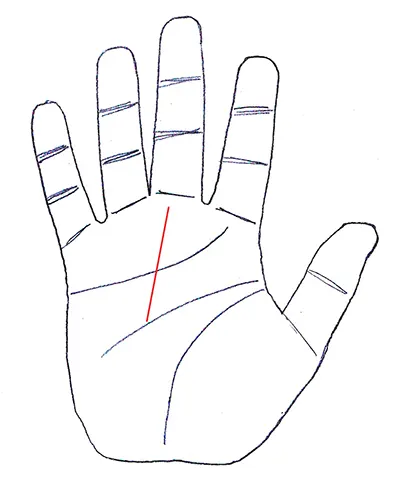
Astrologically, this ties to Mercury (intellect) influencing Saturn, urging strategic planning.
Key Differences: Fate Line Starting from Life Line vs Head Line
The crux of our discussion lies in comparing these origins. The fate line starting from life line vs head line embodies a battle between heart and mind, emotion and logic in crafting destiny.
Comparative Analysis
| Aspect | From Life Line | From Head Line |
|---|---|---|
| Primary Influence | Family, early life, nurture | Intellect, decisions, education |
| Success Timeline | Early to mid-life, built on roots | Mid to late-life, through strategy |
| Personality Traits | Energetic, family-oriented, resilient against odds | Analytical, innovative, overcomes mental hurdles |
| Career Examples | Family businesses, caregiving roles, traditional paths | Tech, academia, creative fields requiring thought |
| Challenges | Family conflicts, inherited burdens | Early failures, decision paralysis |
| Strengths | Strong foundational support, emotional drive | Adaptive thinking, intellectual breakthroughs |
This table underscores how the life line origin fosters a grounded, heritage-based path, while the head line start promotes a cerebral, self-directed journey. In practice, many palms show blends—perhaps a fate line shifting from life to head, indicating evolving influences.
Historical palmists like William Benham in “The Laws of Scientific Hand Reading” (1900) emphasized these differences, noting life line starts for “practical” destinies and head line for “idealistic” ones. Modern interpretations add psychological layers: Life line origins may link to attachment styles, head line to cognitive behaviors.
For a broader view, consider a general palm diagram:
Advanced Variations and Their Impacts on Career and Destiny
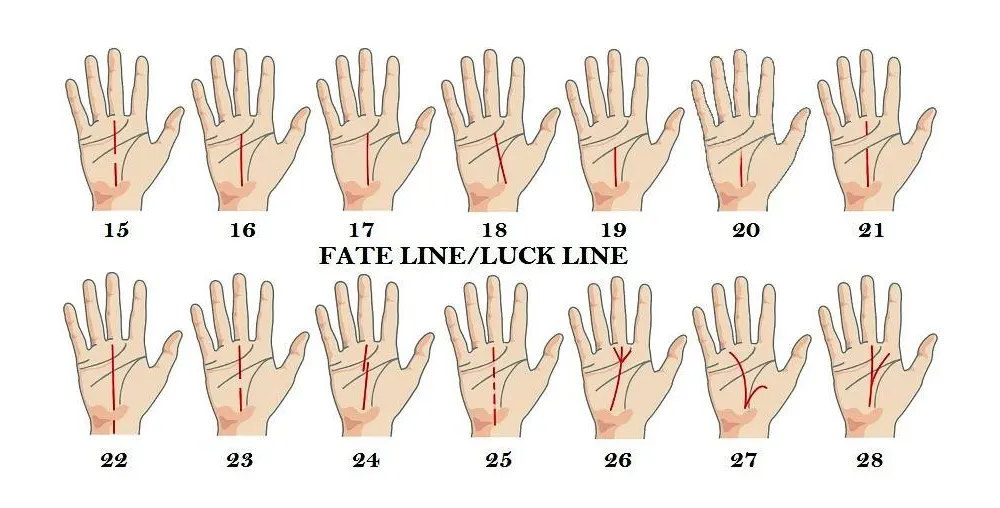
Beyond origins, the fate line in palmistry exhibits myriad variations affecting interpretations:
- Absent Fate Line: Not doom—suggests a free-spirited life where destiny is self-created, common in artists or adventurers.
- Double Fate Line: Parallel lines indicate dual careers or strong support systems, amplifying success.
- Broken Fate Line: Gaps signal major changes; if repaired by overlapping lines, it means recovery through help.
- Fate Line Ending at Heart Line: Emotional decisions influence late career; at Saturn mount, disciplined achievement.
- Influence Lines: Small lines crossing the fate line denote external events, like mentors or setbacks.
In the context of fate line starting from life line vs head line, these add layers. A broken line from life line might mean family disruptions; from head line, intellectual crises.
Examples from readings: One client with a forked fate from head line navigated from corporate law to authorship, reflecting mental versatility.
Incorporate variations image:
Common Questions About the Fate Line in Palmistry
As a palmist, I field numerous inquiries. Here are frequently asked ones, optimized with our focus:
- What does it mean if my fate line starts from the life line? It signifies that family and early experiences heavily influence your career, leading to hard-earned success.
- How does a fate line starting from the head line differ? This points to intellect-driven destiny, with later achievements through decisions and learning.
- What if I have no fate line in palmistry? You’re likely self-made, creating your path without rigid destiny—embrace flexibility!
- Can the fate line change over time? Yes, palms evolve; lifestyle changes can deepen or alter lines.
- Is palmistry accurate for predicting career? While insightful, it’s a guide—free will plays a role.
- What about broken or faint fate lines? They indicate obstacles but also opportunities for growth.
- How do I strengthen my fate line? Through positive actions, like career focus or gemstone remedies (e.g., blue sapphire for Saturn).
- Does hand dominance matter? Right hand shows current path; left, potential.
- Can astrology complement fate line readings? Absolutely—Saturn’s placement can enhance interpretations.
- What if my fate line forks? Multiple paths; choose wisely for optimal destiny.
These address secondary keywords like “fate line meaning” and “fate line types.”
Conclusion: Embracing Your Destiny Through Palmistry
In unraveling the fate line starting from life line vs head line, we see palmistry as more than mysticism—it’s a tool for self-awareness and empowerment. Whether your fate line draws from familial roots or intellectual heights, remember: lines are maps, not mandates. They guide, but your actions chart the course.
As a palmist and astrologer, I encourage you to examine your hands under good light, perhaps journaling insights. If challenges appear, view them as invitations to grow. Ultimately, the fate line in palmistry reminds us that destiny is a dance between fate and free will—embrace it with curiosity and courage.

Великолепно веб-страница у вас есть там.
Thank you for your kind words! We’re thrilled that you liked our page. Stay tuned for more exciting content about palmistry!