
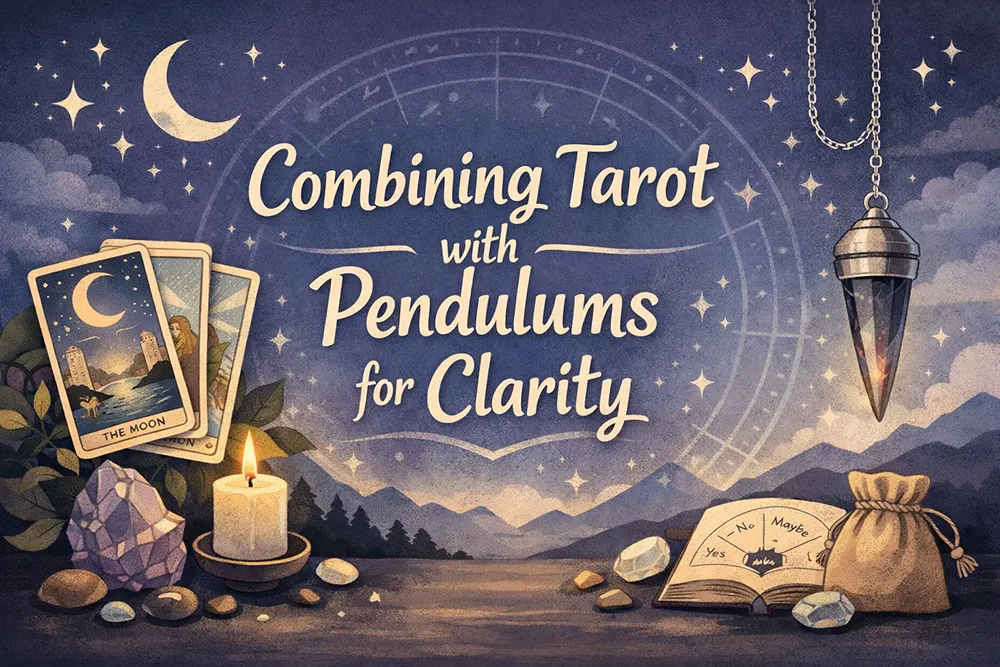
In the mystical world of divination, where ancient wisdom meets intuitive insight, combining tarot with pendulums stands out as a powerful technique for achieving unparalleled clarity in readings. As a seasoned palm reader and astrologer, I’ve long appreciated the depth that tarot cards bring to understanding life’s complexities, but integrating pendulums elevates this practice to new heights. This comprehensive guide explores the art of combining tarot with pendulums, offering step-by-step techniques, practical tips, and insights to help both beginners and experienced practitioners harness this synergistic approach. Whether you’re seeking answers to personal dilemmas or guiding others through their journeys, mastering tarot pendulum techniques can transform vague impressions into crystal-clear revelations.
The focus of this article is on combining tarot with pendulums, a method that blends the narrative richness of tarot cards with the direct, binary responses of pendulums. By weaving these tools together, you can refine interpretations, validate intuitions, and uncover hidden layers in your divination sessions. Throughout this piece, we’ll delve into the history, benefits, and advanced tarot pendulum techniques, ensuring you have all the tools needed to incorporate this into your practice effectively.
The Foundations of Tarot: A Brief Overview
To truly appreciate the power of combining tarot with pendulums, it’s essential to understand each tool individually. Tarot cards, with their origins tracing back to 15th-century Europe, initially served as playing cards before evolving into a profound divination system. A standard tarot deck consists of 78 cards divided into the Major Arcana (22 cards representing significant life themes and spiritual lessons) and the Minor Arcana (56 cards depicting everyday experiences across four suits: Cups, Pentacles, Swords, and Wands).
Tarot readings work by tapping into the subconscious mind and universal energies. When you shuffle and draw cards, you’re essentially allowing synchronicity to guide the selection, revealing patterns and stories that mirror the querent’s situation. For instance, the Fool card might symbolize new beginnings and leaps of faith, while the Tower could indicate sudden upheaval. The beauty of tarot lies in its interpretive flexibility—each card’s meaning can shift based on position, surrounding cards, and the reader’s intuition.
However, tarot’s symbolic nature can sometimes lead to ambiguity. That’s where combining tarot with pendulums comes in, providing a mechanism for confirmation and precision. Pendulums, often made from crystals like amethyst or quartz, act as dowsing tools that respond to subtle energy shifts. By asking yes/no questions, the pendulum swings in specific directions—clockwise for “yes,” counterclockwise for “no,” or back-and-forth for “maybe”—based on the user’s established calibration.
Exploring Pendulums: History and Mechanics
Pendulums have been used for divination since ancient times, with evidence of dowsing practices in Egyptian and Chinese civilizations. The modern pendulum, typically a weighted object suspended from a chain, amplifies the body’s subtle neuromuscular responses to subconscious knowledge. This makes it an ideal companion for tarot, where pendulums can clarify the often poetic messages of the cards.
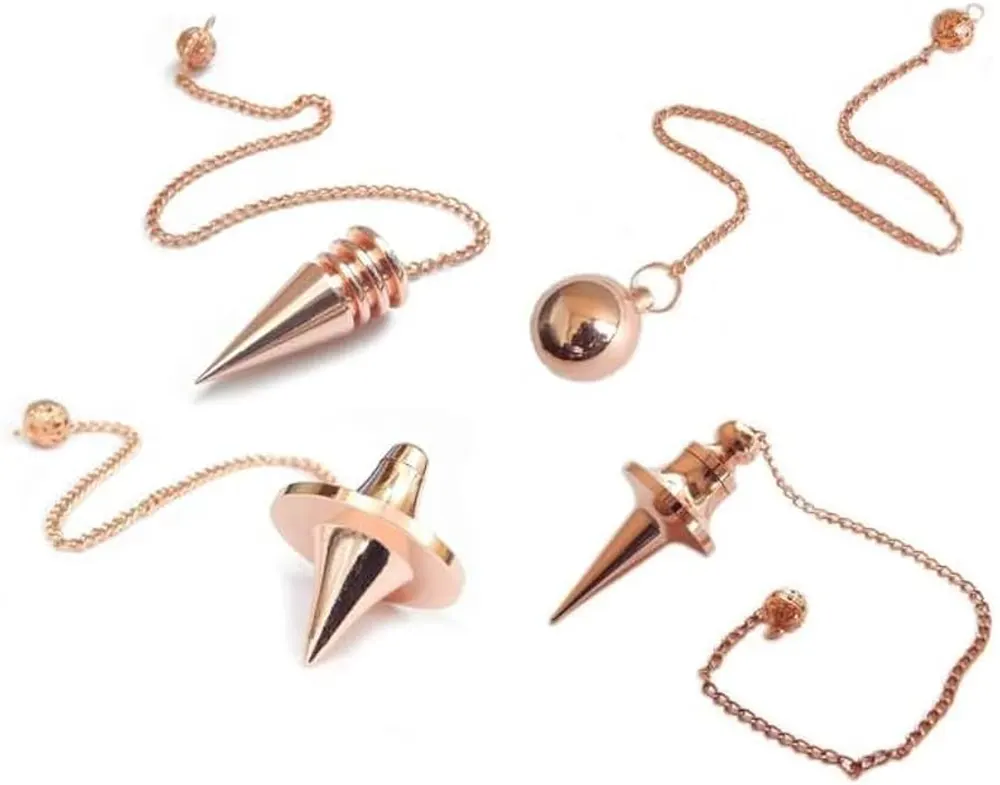
There are various types of pendulums suited for different purposes. Crystal pendulums, such as rose quartz for love queries or clear quartz for general clarity, are popular due to their energy-conducting properties. Metal pendulums offer durability and neutrality, while wooden ones connect to earth energies. When combining tarot with pendulums, choosing a pendulum that resonates with your tarot deck’s vibe is crucial—perhaps a moonstone pendulum for intuitive lunar-themed decks.
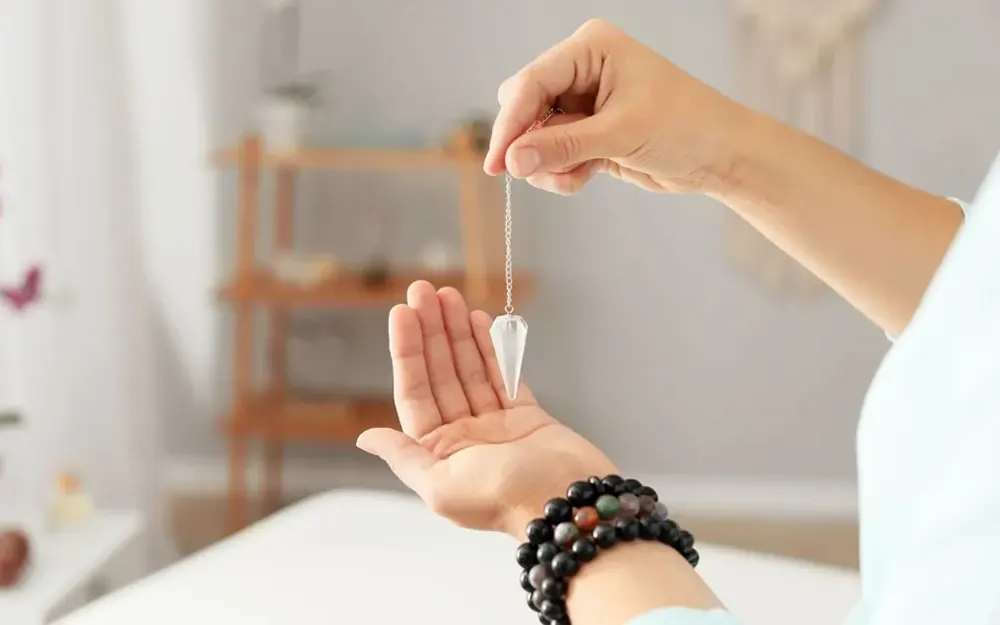
To use a pendulum effectively, start by calibrating it. Hold it steady and ask simple questions with known answers, like “Is my name [your name]?” Observe the swing patterns to establish your “yes,” “no,” and “neutral” responses. This foundational step ensures accuracy when integrating it with tarot readings.
The mechanics behind pendulums involve the ideomotor effect, where unconscious thoughts influence physical movements. In a spiritual context, many believe pendulums channel higher guidance, making them a bridge between the tangible and ethereal. This directness complements tarot’s narrative style, addressing the common challenge of over-interpretation in card readings.
Why Combine Tarot with Pendulums? The Benefits Explained
Combining tarot with pendulums isn’t just a novelty—it’s a strategic enhancement that brings multiple benefits to your divination practice. First and foremost, it provides clarity. Tarot cards offer rich, multifaceted stories, but pendulums cut through the noise with straightforward yes/no answers, helping to confirm or refute initial interpretations.
For example, if a tarot spread suggests a career change but feels unclear, you can use the pendulum to ask, “Is this change beneficial in the short term?” This validation reduces doubt and builds confidence in your readings. Additionally, this method deepens insights by layering tools: tarot provides the “what” and “why,” while pendulums deliver the “when” or “how” through targeted questions.
Another key advantage is accessibility. Beginners often find tarot overwhelming due to the need to memorize meanings, but pendulums simplify the process, making combining tarot with pendulums an excellent entry point into advanced divination. For seasoned readers, it adds a layer of precision, especially in complex queries involving timing or binary choices.
From a spiritual perspective, this combination fosters a balanced energy flow. Tarot engages the left brain’s analytical side with symbolism, while pendulums tap into the right brain’s intuition via kinesthetic responses. Together, they create a holistic reading experience that aligns mind, body, and spirit.
Moreover, in group or professional settings, using tarot pendulum techniques can impress clients by demonstrating versatility and accuracy. It also helps in self-readings, where personal biases might cloud judgment—the pendulum acts as an impartial arbiter.
Preparing Your Tools: Cleansing and Setting Intentions
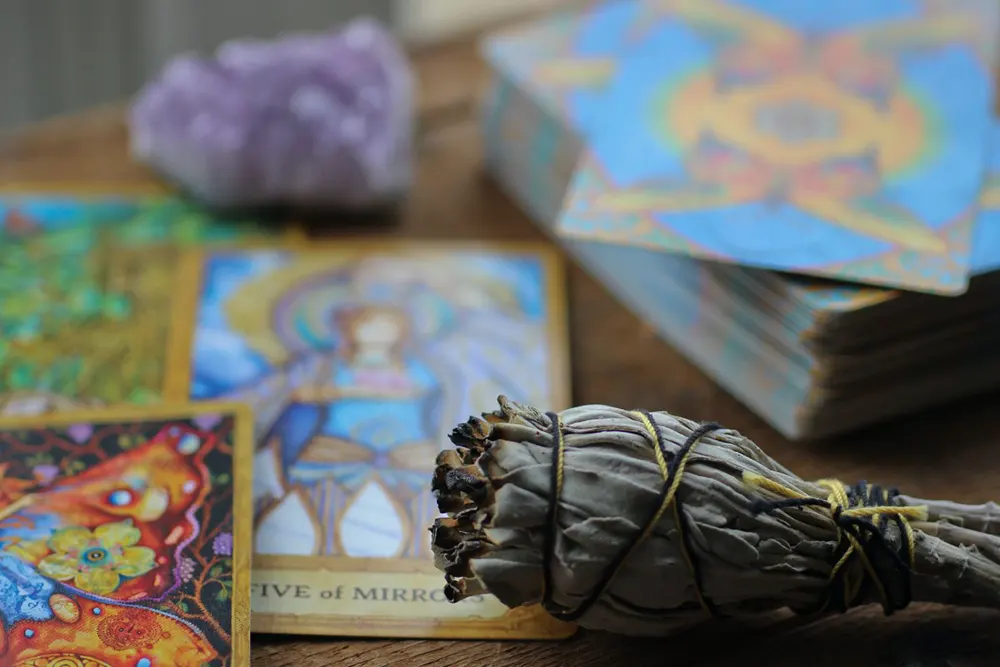
Before diving into tarot pendulum techniques, proper preparation is vital. Cleansing your tools removes residual energies, ensuring pure readings. Start with tarot cards: Fan them out and pass them through sage smoke, visualizing white light enveloping each card. For pendulums, hold them under running water or in moonlight overnight.
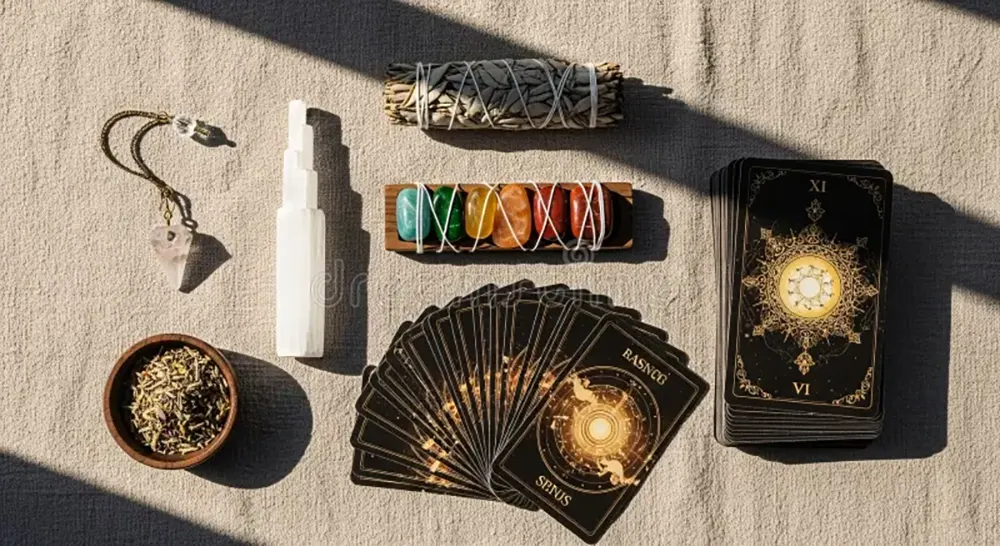
Combining cleansing rituals amplifies effectiveness. Place your tarot deck and pendulum together on an altar with crystals like selenite, which naturally purifies energies. Recite an affirmation: “I cleanse these tools of all negativity, inviting only truth and clarity.”
Setting intentions is equally important. Before a session, meditate briefly, focusing on the query. Hold both tools and state, “I intend for this reading, combining tarot with pendulums, to provide clear, accurate guidance.” This aligns your energy with the tools, enhancing synergy.
Consider your environment too. A quiet space with dim lighting, candles, and incense promotes focus. Organize your setup: Lay out a cloth for the tarot spread, with the pendulum nearby for easy access.
Basic Techniques for Combining Tarot with Pendulums
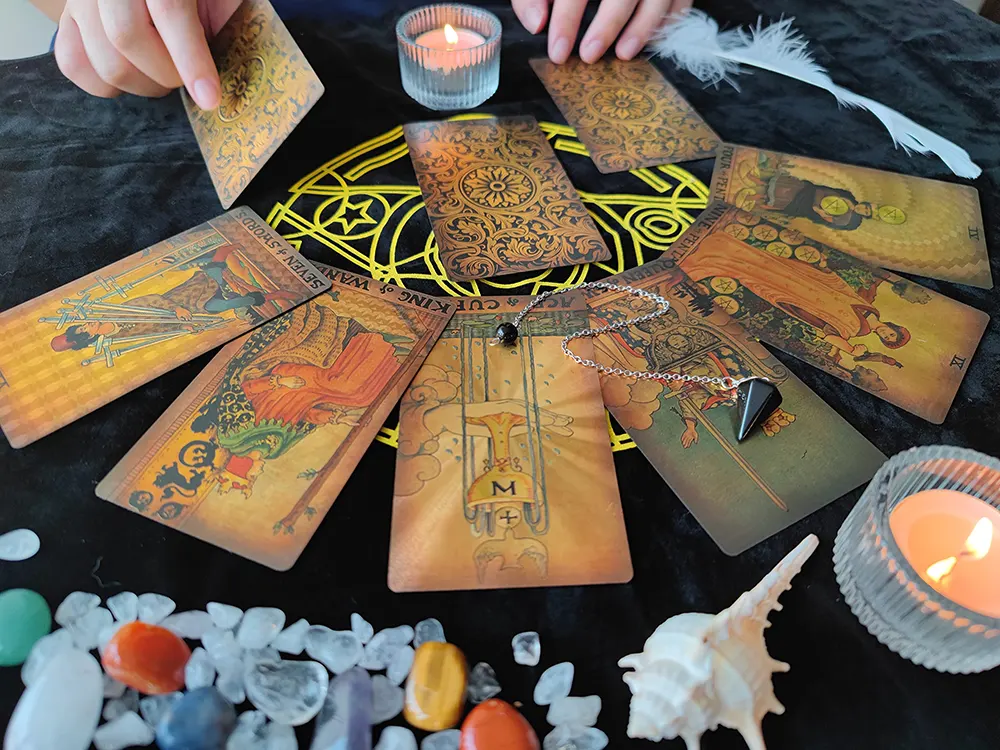
Let’s explore practical tarot pendulum techniques, starting with basics. One simple method is using the pendulum to select cards. Shuffle your tarot deck while focusing on the question, then hold the pendulum over the fanned-out cards. Ask, “Which card holds the key message?” The pendulum will swing toward the relevant one, adding an intuitive layer to random draws.
Another technique involves confirmation. After laying a tarot spread, like the Celtic Cross, use the pendulum over each card to verify interpretations. For instance, if the Outcome card is the Ten of Cups, ask, “Does this indicate emotional fulfillment?” The pendulum’s response refines your reading.
For yes/no questions within a narrative, integrate pendulums seamlessly. Draw tarot cards for context, then use the pendulum for specifics: “Will this relationship improve soon?” This hybrid approach in combining tarot with pendulums ensures comprehensive answers.
Practice with sample queries. Suppose the question is about finances. Draw three tarot cards for past, present, future. Then, pendulum-ask: “Is saving more the right action?” This builds familiarity.
Advanced Tarot Pendulum Techniques for Deeper Insights
Once comfortable with basics, advance to more sophisticated methods. One is the “Pendulum Mapping” technique: Create a chart with tarot card positions or meanings, then swing the pendulum over it to identify focal points. This is excellent for large spreads, highlighting key energies.
Another advanced approach is timing predictions. Tarot often gives vague timelines, but pendulums can specify. Draw a card like the Wheel of Fortune for change, then ask pendulum questions like “Within three months?” to pinpoint events.
Incorporate chakra alignments by using pendulums to detect energy blocks revealed in tarot. If a card suggests emotional turmoil (e.g., Three of Swords), hold the pendulum over corresponding chakras to confirm and suggest remedies.
For group readings, use pendulums to mediate multiple interpretations. Draw collective tarot cards, then pendulum-vote on meanings. This fosters interactive sessions.
Experiment with hybrid spreads: Design layouts where pendulum positions alternate with tarot draws, creating dynamic narratives.
Addressing Common Challenges in Combining Tarot with Pendulums
Even with the best techniques, challenges arise. If the pendulum gives inconsistent swings, recalibrate or check for external influences like wind. For tarot ambiguities, practice journaling readings to track patterns.
Energy depletion is common; take breaks and ground yourself. If tools feel “off,” cleanse more frequently.
Frequently Asked Questions (FAQs) About Combining Tarot with Pendulums
Here are some common questions to demystify this practice:
- Can beginners start combining tarot with pendulums right away? Yes, but learn each tool separately first for better results in tarot pendulum techniques.
- What if my pendulum doesn’t move? It might indicate neutrality or the need for rephrasing the question. Patience is key when combining tarot with pendulums.
- Are there specific pendulums best for tarot? Crystal ones like amethyst enhance intuition, making them ideal for divination clarity with tarot and pendulums.
- How often should I cleanse my tools? Before each session or when energies feel heavy.
- Can this method be used for any question? Absolutely, from love to career, but ethical considerations apply—avoid invading privacy.
- What if tarot and pendulum contradict? Use it as a prompt for deeper exploration; contradictions often reveal nuances.
- Is there a risk of over-reliance? Balance with personal intuition to maintain authenticity in readings.
- How do I choose a pendulum? Hold several and select the one that feels “alive” in your hand.
- Can I use digital tarot with physical pendulums? Yes, for modern twists on traditional methods.
- What’s the best way to store them? In a dedicated pouch or box to preserve energies.
Real-Life Examples and Case Studies
Consider a case where a client queried about a job offer. Tarot showed the Ace of Pentacles (opportunity) but with the Five of Swords (conflict). Using the pendulum, we confirmed the offer’s viability but clarified the conflict as negotiable terms. The client proceeded confidently.
Another example: In a love reading, the Lovers card appeared, but the pendulum negated immediate commitment, suggesting patience. This prevented hasty decisions.
These stories illustrate how combining tarot with pendulums fosters empowered choices.
Conclusion: Embracing Clarity in Your Divination Journey
In conclusion, combining tarot with pendulums for clarity is a transformative technique that bridges narrative depth with precise guidance, enriching your spiritual practice. By mastering tarot pendulum techniques, you unlock doors to profound insights, whether for personal growth or helping others. Remember, the true power lies in your intention and openness—let these tools be extensions of your inner wisdom. As you experiment, may your readings illuminate paths with unwavering clarity, fostering a deeper connection to the universe’s mysteries.
Related Posts
How to Cleanse Tarot Deck: 10 Essential Methods and Rituals
The Importance of Grounding Before a Tarot Reading
How to Ask Tarot Questions: Choosing the Right One for Accurate Insights
Understanding the Role of the Querent in a Tarot Session
How to Read Tarot Cards for Beginners: A Step-by-Step Guide