
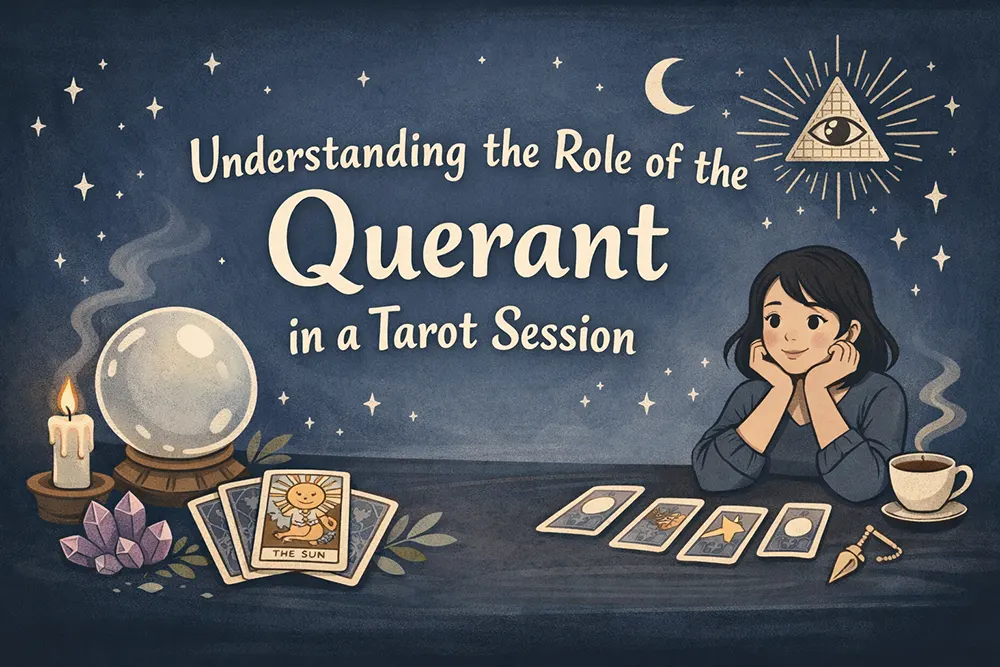
In the mystical world of tarot readings, the querent in tarot plays a pivotal role that often goes underappreciated. Whether you’re new to tarot or a seasoned seeker, grasping the essence of the querent in tarot can transform your sessions from mere card flips to profound journeys of self-discovery. As a palm reader and astrologer with years of experience in divination practices, I’ve seen firsthand how the querent in tarot influences the entire reading process. This comprehensive guide delves deep into the role of the querent in tarot, exploring its nuances, responsibilities, and impacts on achieving meaningful insights.
The term “querent in tarot” refers to the individual seeking guidance through a tarot session. Derived from the Latin word “quaerere,” meaning “to seek,” the querent in tarot is not just a passive recipient but an active participant whose energy, questions, and openness shape the reading’s outcome. In this article, we’ll uncover why understanding the role of the querent in tarot is crucial for anyone interested in tarot reading basics. We’ll cover everything from preparation tips to common misconceptions, ensuring you walk away empowered to engage more effectively in your next tarot session.

What Is a Querent in Tarot? Defining the Core Concept
To truly appreciate the role of the querent in tarot, we must start with a clear definition. The querent in tarot is the person who poses the questions and receives the interpretation of the tarot cards. Unlike other forms of divination where the seeker might remain detached, in tarot, the querent in tarot is integral to the energy flow. This involvement ensures that the reading resonates on a personal level, making it a collaborative experience between the querent in tarot and the reader.
Historically, the concept of the querent in tarot dates back to the 15th century when tarot cards evolved from playing cards to tools for divination. In early practices, the querent in tarot would often shuffle the deck themselves, infusing their personal energy into the cards. Today, even in online sessions, the querent in tarot maintains this vital connection by focusing intently on their queries.
Why does this matter? Because the querent in tarot isn’t just asking for answers; they’re co-creating them. Their mindset, emotions, and intentions act as a conduit for the universe’s messages. For instance, if a querent in tarot approaches the session with skepticism, the cards might reflect barriers or confusion. Conversely, an open-hearted querent in tarot often receives clearer, more actionable insights.
In my practice as a palm reader and astrologer, I’ve noticed parallels between the querent in tarot and clients in astrology readings. Just as planetary alignments require the client’s birth details for accuracy, tarot demands the querent in tarot’s genuine engagement. This synergy amplifies the reading’s relevance, turning abstract symbols into personalized advice.
Secondary keywords like “tarot reading querent” emphasize this dynamic. The tarot reading querent isn’t a bystander; they’re the hero of their own story, using the cards as a mirror to reflect inner truths. Understanding this shifts the perspective from passive fortune-telling to active self-empowerment.
The Importance of the Querent’s Role in Tarot Readings
Delving deeper, the role of the querent in tarot extends beyond mere participation—it’s about influence and responsibility. In every tarot session, the querent in tarot sets the tone. Their questions guide the spread, their reactions provide feedback, and their interpretations (often shared with the reader) add layers of meaning.
Consider the energy exchange: Tarot operates on the principle that everything is connected through universal energy. The querent in tarot brings their unique vibrational frequency to the table, which interacts with the reader’s intuition and the cards’ archetypes. This interplay can reveal hidden patterns, potential outcomes, and areas for growth.
One key aspect of the role of the querent in tarot is question formulation. Vague queries like “What’s my future?” yield broad, unhelpful responses. Instead, a well-crafted question from the querent in tarot, such as “What can I do to improve my career prospects?” invites specific, empowering guidance. This precision is why educating oneself on the role of the querent in tarot is essential for fruitful sessions.
Moreover, the querent in tarot must cultivate openness. Resistance or preconceived notions can block the flow of information. In my experience, clients who embrace vulnerability as the querent in tarot often experience breakthroughs, whether in love, career, or personal development.
The role of the querent in tarot also involves ethical considerations. Respecting the process means avoiding manipulative questions or expecting guaranteed outcomes. Tarot isn’t about predestination but possibilities, and the querent in tarot’s attitude determines how they navigate those paths.
Incorporating secondary keywords like “querent tarot session,” we see how the session’s success hinges on the querent’s preparation and mindset. A prepared querent in tarot enhances the reader’s ability to deliver accurate, transformative readings.

Preparing as a Querent in Tarot: Steps for Maximum Benefit
Preparation is key to maximizing the role of the querent in tarot. As someone who guides clients through palmistry and astrology, I always advise thorough readiness before any divination session. For the querent in tarot, this begins with self-reflection.
Start by clarifying your intentions. What do you hope to gain as the querent in tarot? Journaling can help distill thoughts into focused questions. Avoid yes/no queries; opt for open-ended ones that empower the querent in tarot to take action.
Next, create a conducive environment. Whether in-person or virtual, the querent in tarot should find a quiet space free from distractions. Grounding techniques, like deep breathing or meditation, align your energy, making you a more receptive querent in tarot.
Researching basic tarot knowledge enhances your role. Familiarize yourself with major arcana cards or common spreads. This doesn’t mean becoming an expert but understanding enough to engage meaningfully as the querent in tarot.
During the session, active listening is crucial. The querent in tarot should note insights, ask clarifying questions, and share intuitive hits. Post-session, reflect on the reading. How does it apply to your life? Journaling follow-ups reinforces the querent in tarot’s learning.
Emotional readiness is another facet. The querent in tarot might encounter uncomfortable truths. Approaching with resilience turns potential challenges into growth opportunities.
By preparing diligently, the querent in tarot not only elevates the session’s quality but also deepens their connection to the mystical arts.
Common Challenges Faced by the Querent in Tarot
Even with preparation, the querent in tarot may encounter hurdles. One common issue is emotional overwhelm. Intense readings can stir deep feelings, but viewing them as catalysts for healing helps the querent in tarot process effectively.
Misinterpretation is another challenge. The querent in tarot might project biases onto the cards. Collaborating with the reader clarifies meanings, ensuring the role of the querent in tarot remains balanced.
Skepticism can hinder openness. If you’re a doubtful querent in tarot, start with small questions to build trust. Over time, positive experiences validate the process.
Time constraints in sessions can limit depth. As the querent in tarot, prioritize key questions to make the most of the time.
Addressing these challenges strengthens the querent in tarot’s ability to derive value from readings.

The Psychological Benefits of Being a Querent in Tarot
Beyond mysticism, the role of the querent in tarot offers psychological perks. Engaging as a querent in tarot fosters self-awareness, as cards mirror subconscious thoughts.
It promotes mindfulness. The querent in tarot must be present, enhancing focus and reducing anxiety.
Decision-making improves. By exploring options, the querent in tarot gains confidence in choices.
Therapeutically, it aids emotional processing. The querent in tarot can release burdens through symbolic interpretation.
Integrating with therapy, the querent in tarot finds complementary support for mental health.
Integrating the Querent’s Role with Other Divination Practices
As a palm reader and astrologer, I see synergies. The querent in tarot can combine insights with palm lines or birth charts for holistic views.
For example, a tarot reading might confirm astrological transits, enriching the querent in tarot’s understanding.
This integration amplifies the role of the querent in tarot across modalities.
Advanced Tips for the Experienced Querent in Tarot
For veterans, experiment with spreads. The querent in tarot can suggest custom layouts for specific issues.
Develop intuition. Over time, the querent in tarot might interpret cards independently.
Track patterns. Journaling recurring themes helps the querent in tarot spot life cycles.
Ethical querying evolves. The querent in tarot learns to ask empowering, non-intrusive questions.
Cultural Perspectives on the Querent in Tarot
Globally, the querent in tarot varies. In Western traditions, it’s individualistic; in Eastern, communal.
Cultural symbols influence interpretations, broadening the querent in tarot’s perspective.

Common Questions Asked by the Querent in Tarot (FAQs)
As part of tarot reading basics, addressing frequent queries enhances understanding of the querent in tarot.
- What is a querent in tarot? The querent in tarot is the seeker asking questions during a reading.
- How should I prepare as a querent in tarot? Focus on clear questions, meditate, and approach openly.
- Can the querent in tarot influence the reading? Absolutely; their energy shapes outcomes.
- What if I’m skeptical as a querent in tarot? Start small to build trust.
- How often should a querent in tarot get readings? As needed, but avoid dependency.
- What’s the difference between querent and reader in tarot? The querent asks; the reader interprets.
- Can anyone be a querent in tarot? Yes, no prior experience required.
- How to handle negative cards as a querent in tarot? View them as growth opportunities.
- Is the role of the querent in tarot the same online? Yes, energy transcends distance.
- What makes a good question for the querent in tarot? Open-ended, focused on empowerment.
These FAQs demystify the querent in tarot, making sessions more approachable.
Conclusion: Embracing Your Role as the Querent in Tarot for Lifelong Insights
In wrapping up this exploration of the role of the querent in tarot, remember that you, as the querent in tarot, hold the key to unlocking profound wisdom. By actively participating, preparing thoughtfully, and approaching with openness, the querent in tarot transforms readings into catalysts for positive change. Whether seeking clarity on relationships, career, or self-growth, embracing this role empowers you to navigate life’s mysteries with confidence.
As a palm reader and astrologer, I encourage every querent in tarot to view sessions not as predictions but as mirrors reflecting your inner potential. The journey of the querent in tarot is ongoing, filled with discovery and evolution. Step into it boldly, and watch how the cards illuminate your path toward fulfillment and enlightenment.
Related Posts
The Importance of Grounding Before a Tarot Reading
How to Ask Tarot Questions: Choosing the Right One for Accurate Insights
Combining Tarot with Pendulums for Clarity
How to Read Tarot Cards for Beginners: A Step-by-Step Guide