
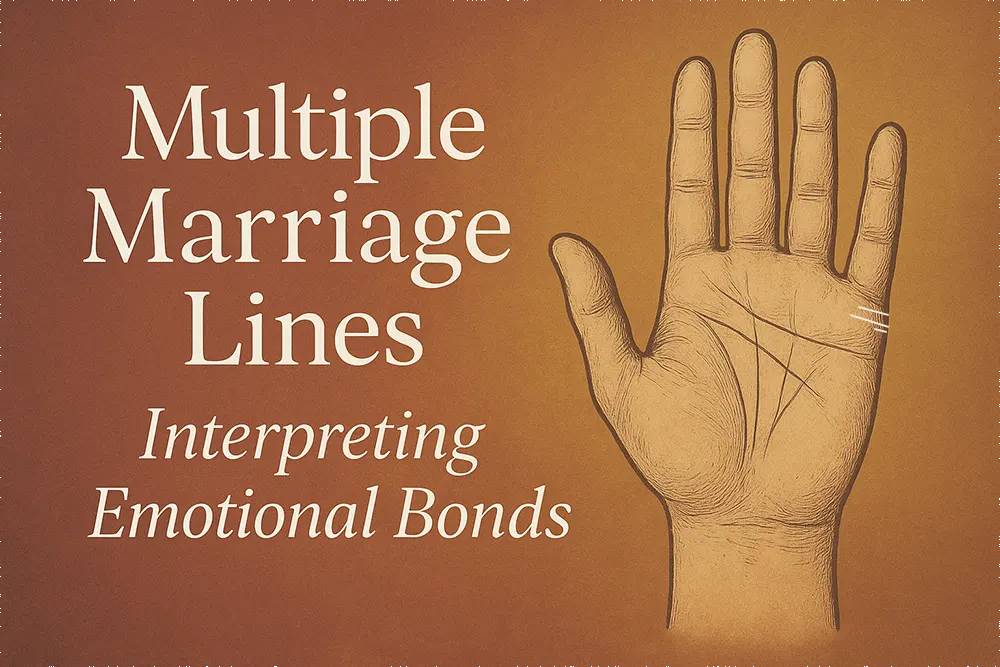
In the ancient art of palmistry, also known as chiromancy, the lines etched on our palms serve as a map to our life’s journey, revealing insights into our personality, career, health, and most intriguingly, our relationships. Among these, the marriage lines—often referred to as relationship lines or affection lines—hold a special place for those seeking clarity on love, commitment, and emotional bonds. If you’ve ever glanced at your palm and noticed more than one horizontal line beneath your pinky finger, you might be wondering about the significance of multiple marriage lines in palmistry. This phenomenon isn’t just a random occurrence; it’s a window into the complexity of your romantic life, hinting at multiple partnerships, deep emotional connections, or even transformative experiences in love.
As a seasoned palmist and astrologer, I’ve spent years interpreting these subtle markings for clients from all walks of life. Whether you’re curious about your own hand or seeking guidance for a loved one, understanding multiple marriage lines in palmistry can provide profound revelations. In this comprehensive guide, we’ll delve deep into what these lines mean, how to read them accurately, common variations, and how they interplay with other palm features. By the end, you’ll have the tools to interpret your own marriage lines palm reading with confidence, all while optimizing your knowledge for personal growth.
But first, let’s set the stage: Palmistry isn’t fortune-telling in the mystical sense; it’s a blend of observation, psychology, and ancient wisdom. The marriage lines, specifically, are located on the edge of the palm under the Mercury finger (pinky), running horizontally from the percussion (outer edge) toward the heart line. A single clear line might suggest a straightforward path in love, but multiple marriage lines in palmistry often indicate a richer, more layered story—one filled with passion, lessons, and evolution.
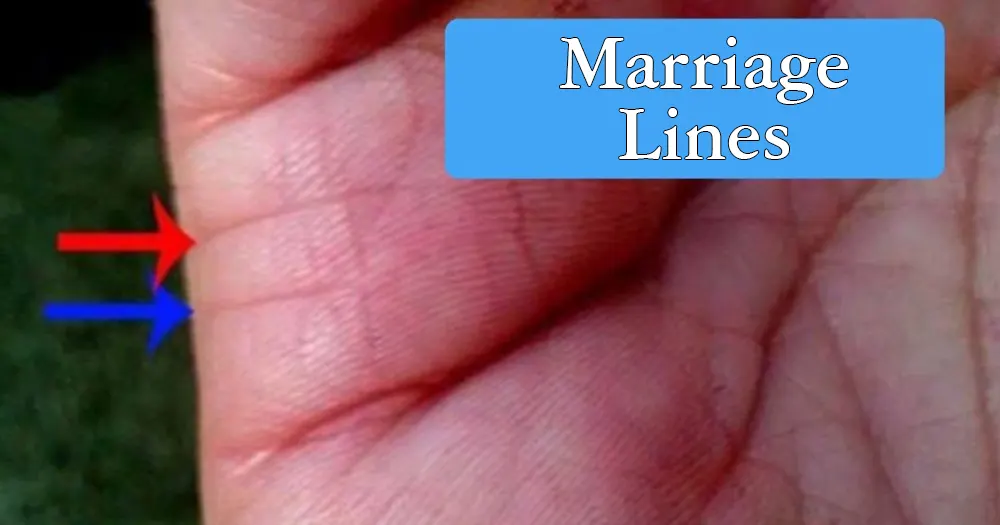
What Are Marriage Lines in Palmistry?
To truly grasp multiple marriage lines in palmistry, we must start with the basics. Marriage lines are short, horizontal creases on the side of the palm, just below the base of the little finger. They are not present on every hand—some people have none, which doesn’t mean a lack of love but perhaps a different expression of it. These lines are believed to represent significant romantic relationships, marriages, or deep emotional attachments that leave a lasting impact on one’s life.
In traditional palmistry, originating from ancient India, China, and Egypt, these lines were initially called “lines of union” or “affection lines.” Over time, they evolved to be associated with marriage due to societal emphasis on matrimonial bonds. However, in modern interpretations, especially in Western palmistry, they encompass all forms of committed relationships, including long-term partnerships, civil unions, and even soulmate connections without formal marriage.
A key point: The depth, length, and clarity of these lines matter. A deep, long line suggests a strong, enduring bond, while faint or broken ones might indicate challenges or fleeting romances. When we talk about multiple marriage lines in palmistry, we’re looking at two or more such lines, which can parallel each other or appear at different levels, each telling a part of your romantic narrative.
For instance, the uppermost line often relates to later-life relationships, while lower ones might pertain to earlier experiences. This layering adds depth to marriage lines palm reading, making it a personalized art rather than a one-size-fits-all prediction.
The Significance of Multiple Marriage Lines
Now, let’s dive into the heart of the matter: What do multiple marriage lines in palmistry really signify? Contrary to popular myths, they don’t always predict multiple marriages or divorces. Instead, they often symbolize multiple significant emotional bonds throughout one’s lifetime. These could be marriages, but they might also represent profound loves, engagements, or even non-romantic attachments that mimic marital intensity, like close friendships or business partnerships with emotional undertones.
In my practice, I’ve seen clients with three or four marriage lines who have had only one legal marriage but multiple deep relationships that shaped their emotional world. For example, a client with two parallel lines might experience a youthful romance followed by a mature, stable union. The presence of multiple marriage lines in palmistry can indicate:
- Emotional Richness: A life filled with varied romantic experiences, teaching resilience and growth.
- Karmic Lessons: Past-life connections or repeated patterns in relationships that need resolution.
- Adaptability in Love: The ability to form new bonds after endings, showing emotional flexibility.
It’s crucial to note that these lines can change over time—palms aren’t static. Stress, lifestyle changes, or personal development can alter their appearance, reflecting evolving emotional states.
How to Locate and Read Multiple Marriage Lines
Reading multiple marriage lines in palmistry requires a gentle touch and keen observation. Start by examining your dominant hand (the one you write with), as it reflects your current life path, while the non-dominant hand shows innate potentials.
Steps to Locate Them:
- Extend your hand palm up in natural light.
- Look at the area under the pinky finger, on the outer edge.
- Identify short horizontal lines entering from the side—these are your marriage lines.
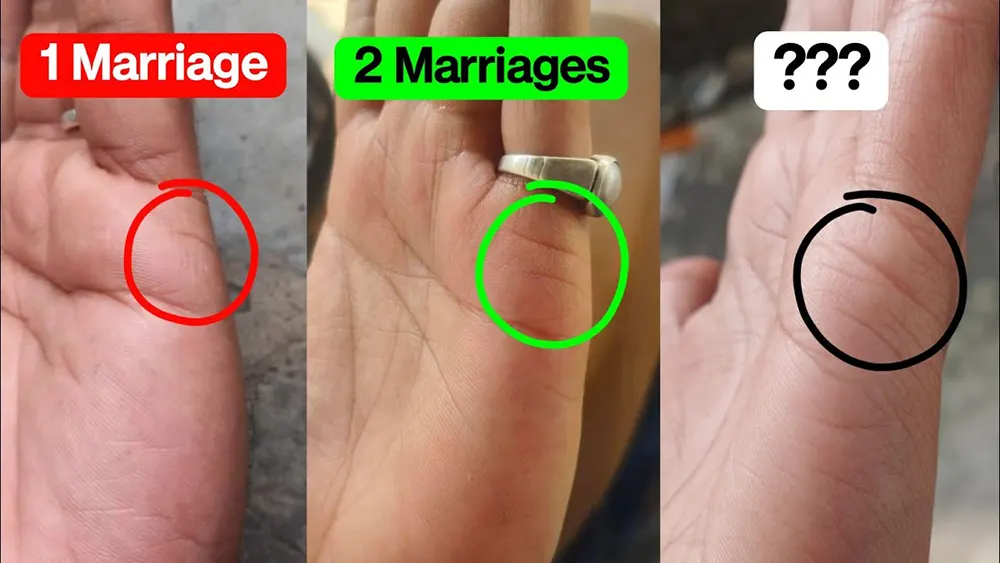
- Count them: One might mean simplicity in love; multiple marriage lines in palmistry suggest complexity.
To interpret:
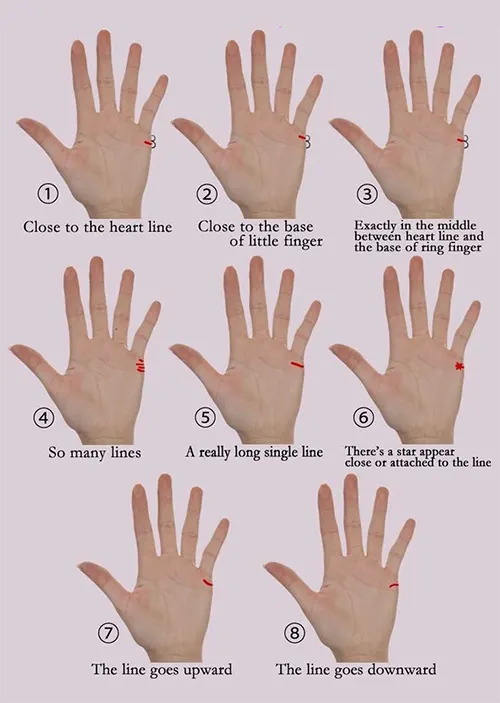
- Position: Higher lines indicate later relationships; lower ones, earlier ones.
- Length: Long lines = long-lasting bonds; short = brief but impactful.
- Depth: Deep = strong commitment; faint = casual or unfulfilled.
- Curvature: Straight = stable; wavy = emotional ups and downs; forked = potential separations or choices.
For multiple marriage lines, compare their qualities. If one is strong and the others faint, it might mean one primary relationship with supporting flings. Overlapping lines could signify concurrent emotions or affairs.
Remember, context matters—cross-reference with the heart line (for emotional nature) and fate line (for life events). In marriage lines palm reading, no line stands alone.
Common Variations and Their Interpretations
The beauty of palmistry lies in its nuances. Multiple marriage lines in palmistry come in various forms, each with unique meanings:
- Parallel Lines: Suggest balanced multiple relationships, perhaps sequential marriages or long-term loves without overlap. Indicates a person who learns from each bond.
- Forked Lines: At the end of a line, this might mean a parting of ways, like divorce, but with multiple marriage lines, it could signal branching into new loves.
- Broken Lines: Interrupted bonds, perhaps due to external factors. Multiple broken lines hint at resilience through repeated heartbreaks.
- Chained or Islanded Lines: Emotional turmoil or complications in relationships. In multiples, it shows a pattern of intense but challenging connections.
- Upward or Downward Curves: Upward = positive growth in love; downward = disappointments. Multiple such lines amplify the theme.
In female hands, multiple marriage lines in palmistry might emphasize nurturing roles in relationships, while in male hands, they could highlight protective or provider aspects. However, gender neutrality is key in modern readings.
Cultural variations add layers: In Indian palmistry (hasta rekha), these lines tie to Vedic astrology, linking to planetary influences like Venus for love. In Chinese palmistry, they relate to yin-yang balance in partnerships.
Influence of Other Palm Lines on Marriage Lines
No interpretation of multiple marriage lines in palmistry is complete without considering the bigger picture. The heart line, running across the top of the palm, reveals your emotional style—if it’s chained, it might explain why multiple lines appear turbulent. A strong head line (below the heart) suggests rational decisions in love, tempering impulsive bonds.
The fate line, vertical through the center, can intersect or influence marriage lines, indicating how career or destiny affects relationships. For example, a fate line branching toward marriage lines might mean a partner met through work.
Mounts (fleshy pads) matter too: A developed Mount of Venus (base of thumb) enhances passion in multiple marriage lines, while a flat one suggests restraint.
In astrological palmistry, which I specialize in, these lines align with zodiac signs. Fire signs (Aries, Leo, Sagittarius) might have bold, multiple lines for adventurous loves; water signs (Cancer, Scorpio, Pisces), deeper emotional layers.
Cultural and Historical Perspectives
Palmistry’s roots trace back over 5,000 years, with marriage lines palm reading evolving across cultures. In ancient Babylon, they predicted family size; in Renaissance Europe, they warned of marital fidelity.
Today, in the U.S., palmistry blends with psychology—multiple marriage lines in palmistry seen as indicators of attachment styles (secure, anxious, avoidant). This modern lens makes it accessible, helping people navigate dating apps or therapy.
Common Questions About Multiple Marriage Lines in Palmistry
As a palmist, I field many queries. Here are some FAQs on multiple marriage lines in palmistry:
- What if I have no marriage lines? It doesn’t mean lifelong singledom—perhaps your bonds are internal or non-traditional. Focus on heart line for love insights.
- Do multiple marriage lines always mean multiple marriages? Not necessarily. They represent significant emotional bonds, which could be platonic or romantic without wedding bells.
- Can marriage lines change? Yes! Palms evolve with life experiences. Meditation or positive affirmations can even influence their clarity.
- What about relationship lines on palm in left vs. right hand? Left shows potential; right, actualized. Discrepancies highlight growth areas.
- How do islands on marriage lines affect interpretations? They suggest periods of isolation or challenges in bonds, but with multiples, recovery is implied.
- Is there a difference in marriage lines for men and women? Traditionally yes, but modern palmistry emphasizes individuality over gender.
- Can palmistry predict divorce? It hints at potentials, not certainties. Forked multiple lines might suggest separations, but free will prevails.
- How accurate is marriage lines palm reading? As accurate as your interpreter’s skill and your openness. It’s a tool for self-reflection.
- What if my partner has different marriage lines? Compare for compatibility—matching depths suggest harmony.
- Are there remedies for unfavorable multiple marriage lines? In astrology, wearing gems like rose quartz or Venus mantras can harmonize energies.
These questions underscore the curiosity around relationship lines on palm, making palmistry a timeless pursuit.
Conclusion: Embracing the Emotional Tapestry of Your Palm
In conclusion, multiple marriage lines in palmistry are more than mere creases—they’re a testament to the multifaceted nature of human connections. Whether indicating sequential loves, parallel emotions, or profound growth through relationships, they invite us to reflect on our emotional journeys. As a palmist and astrologer, I encourage you to view these lines not as predestined fates but as guides for self-awareness and intentional living.
Remember, the true power of marriage lines palm reading lies in using its insights to foster healthier bonds. If your palm shows multiple marriage lines, celebrate the richness it implies—a life abundant in love’s lessons. Consult a professional for personalized readings, and always approach with an open heart. After all, in the grand tapestry of life, every line tells a story worth honoring.
Related Posts
Chained Heart Line: Emotional Vulnerabilities Revealed
Chained Life Line: Signs of Health Fluctuations
Sun Line in Palmistry: Unveiling the Partial Sun Line and Its Promise of Emerging Talent and Recognition
Faint Life Line: Does It Indicate Low Energy?
Case Study: Health Line and Lifestyle Choices
Fate Line Starting from Life Line vs Head Line: Unlocking the Secrets of Your Career and Destiny in Palmistry