
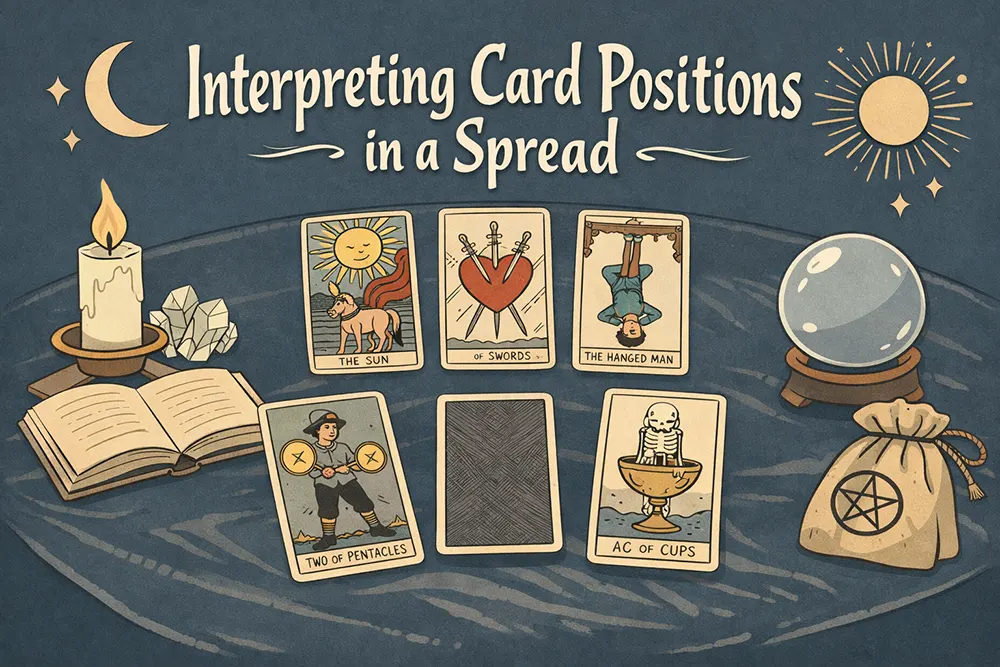
In the captivating world of tarot reading, understanding how to interpret tarot spread positions is the key to transforming a simple deck of cards into a powerful tool for self-discovery, guidance, and personal growth. Whether you’re a novice dipping your toes into tarot reading basics or someone seeking to deepen your practice, mastering tarot spread positions can reveal profound insights into life’s questions. This comprehensive guide will walk you through the essentials of interpreting tarot spread positions, offering practical tips, unique approaches, and real-value strategies to make your readings more intuitive and impactful.
Tarot spreads are structured layouts where each card’s placement—known as a position—carries specific meaning. Interpreting tarot spread positions isn’t just about memorizing card meanings; it’s about weaving together the narrative created by the cards’ interactions within those positions. By focusing on how to interpret tarot spread positions effectively, you’ll learn to read the subtle energies, themes, and stories that emerge, turning abstract symbols into actionable advice.
This article dives deep into popular tarot spreads, explains the significance of each position, and provides innovative ways to enhance your interpretations. We’ll cover everything from basic three-card setups to complex arrangements like the Celtic Cross, while incorporating mindfulness techniques and modern applications to add a fresh twist. With a focus on delivering genuine value, you’ll gain the confidence to conduct readings that resonate on a personal level, avoiding common pitfalls and embracing creativity.
Why Understanding Tarot Spread Positions Matters in Tarot Reading Basics
Before we explore specific spreads, let’s establish why interpreting tarot spread positions is fundamental to tarot reading basics. Tarot cards aren’t random; their positions in a spread act as a framework, much like chapters in a book. Each position represents a facet of your query—past influences, present challenges, future potentials, or hidden factors. When you learn how to interpret tarot spread positions, you unlock the ability to see the bigger picture, connecting individual card meanings to form a cohesive story.
For beginners, starting with simple spreads helps build intuition. As you progress, more intricate layouts challenge you to refine your skills in interpreting tarot spread positions. This process fosters expertise, as repeated practice reveals patterns and nuances unique to your reading style. According to tarot traditions, positions aren’t rigid; they’re flexible guides that adapt to the reader’s energy and the querent’s intent.
One unique idea to elevate your practice: Incorporate “positional anchors.” Before drawing cards, assign a personal keyword or affirmation to each position based on your life experiences. For instance, if a position represents “obstacles,” anchor it with “growth opportunities” to shift your mindset toward positivity. This approach adds depth and makes interpreting tarot spread positions more empowering, aligning with modern self-help philosophies.
The Role of Intuition in Interpreting Tarot Spread Positions
Intuition plays a starring role in how to interpret tarot spread positions. While traditional meanings provide a foundation, your gut feelings often reveal hidden layers. For example, a card like the Tower in a “future” position might traditionally signal upheaval, but intuitively, it could represent a necessary breakthrough in your career. To cultivate this, practice daily one-card pulls focused on position interpretation, asking, “What does this card mean in the context of my day’s ‘core energy’?”
Essential Tarot Reading Basics: Choosing the Right Spread for Your Question
Selecting the appropriate spread is the first step in mastering how to interpret tarot spread positions. Not all layouts suit every query. For quick insights, opt for simpler spreads; for in-depth analysis, choose complex ones. Here, we’ll break down tarot reading basics by categorizing spreads based on common life areas like love, career, and personal development.
Simple Spreads for Beginners: Mastering Three-Card Layouts
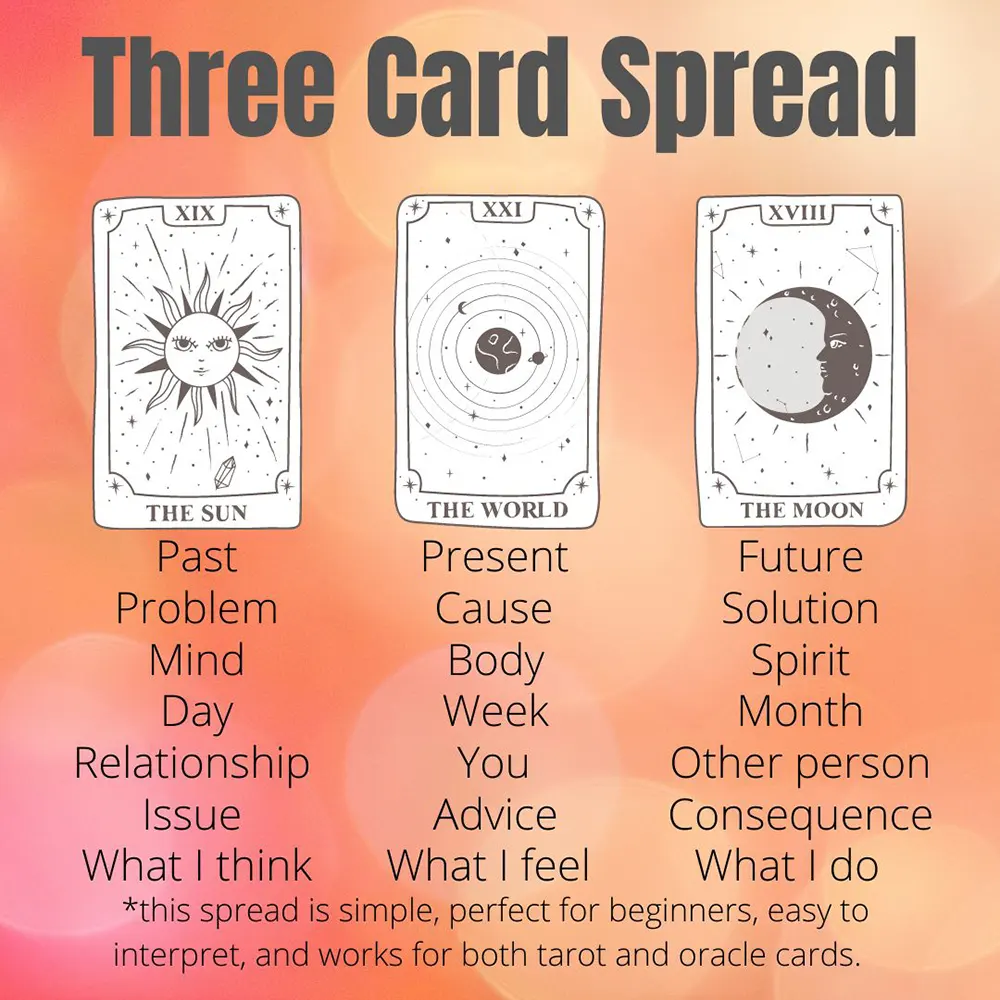
The three-card spread is a cornerstone of tarot reading basics, ideal for those new to interpreting tarot spread positions. Its simplicity allows focus on core elements without overwhelm.
- Past-Present-Future Spread: This classic layout helps trace timelines.
- Position 1: Past – Reflects influences shaping your current situation. Interpret this position by considering how past events echo in the card’s symbolism.
- Position 2: Present – Captures the now. When interpreting tarot spread positions here, note immediate energies or challenges.
- Position 3: Future – Offers potential outcomes. Look for advisory tones in the card.
Example: If the query is “How will my job search progress?” and you draw the Eight of Pentacles (Past: Diligence in skills), The Chariot (Present: Determined action), and Ten of Pentacles (Future: Stability), the interpretation suggests building on past efforts leads to long-term success.
A unique twist: Add a “shadow card” (bottom of the deck) as Position 4 for unconscious influences, enhancing depth in interpreting tarot spread positions.
- Situation-Action-Outcome Spread: Perfect for decision-making.
- Position 1: Situation – Defines the issue.
- Position 2: Action – Suggests steps to take.
- Position 3: Outcome – Predicts results.
This spread emphasizes proactive interpretation, encouraging readers to view positions as dynamic advice.
Intermediate Spreads: Expanding Your Skills in Interpreting Tarot Spread Positions
Once comfortable with basics, advance to spreads with more positions. These require synthesizing multiple cards, honing your ability to interpret tarot spread positions holistically.
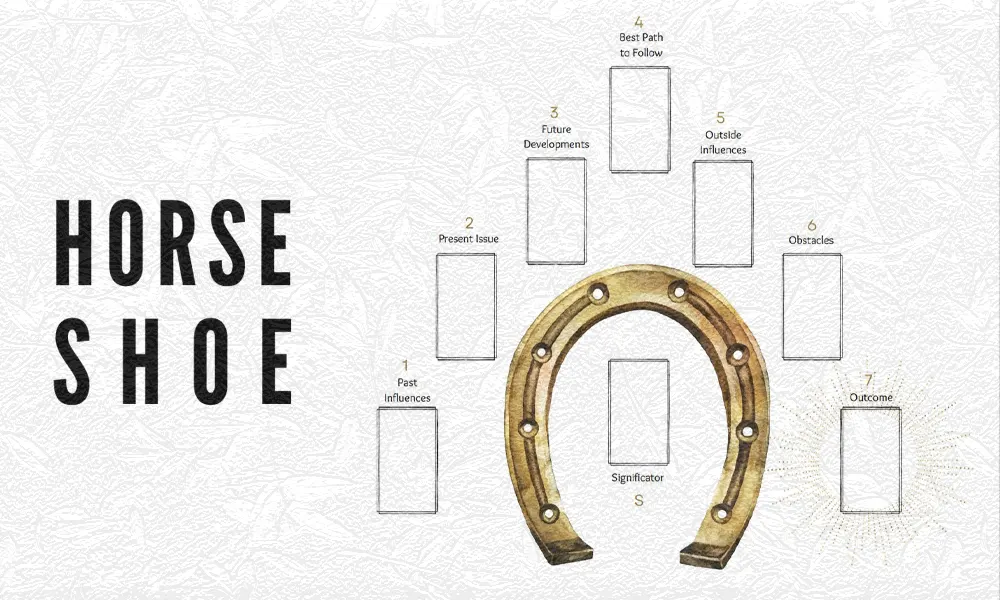
The Horseshoe Spread: A Seven-Card Journey
The Horseshoe spread, shaped like its namesake, provides a balanced view, making it excellent for comprehensive queries.
- Position 1: Past – Historical context.
- Position 2: Present – Current state.
- Position 3: Future – Short-term outlook.
- Position 4: Obstacles – Challenges ahead. When interpreting tarot spread positions here, focus on reversal meanings for added nuance.
- Position 5: External Influences – People or events affecting you.
- Position 6: Attitudes – Your mindset.
- Position 7: Outcome – Likely resolution.
Unique idea: Use this spread for “elemental mapping.” Assign elements (fire, water, air, earth) to positions based on card suits, then interpret how elemental imbalances affect the reading. For instance, too many fire cards in obstacle positions might indicate burnout.
Example Reading: For a relationship question, drawing The Lovers in Position 6 (Attitudes: Harmony-seeking) alongside The Devil in Position 4 (Obstacles: Attachments) suggests internal conflicts need addressing for a positive outcome.
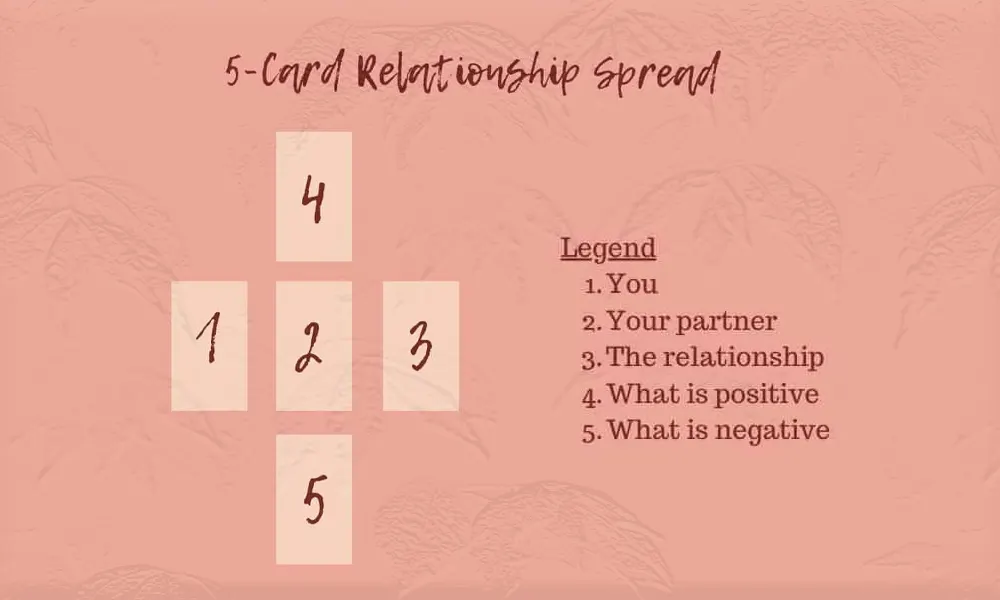
The Relationship Spread: Focusing on Interpersonal Dynamics
Tailored for love queries, this six-card spread sharpens skills in interpreting tarot spread positions related to emotions.
- Position 1: You – Your energy.
- Position 2: Partner – Their perspective.
- Position 3: Relationship Foundation – Shared base.
- Position 4: Strengths – Positive aspects.
- Position 5: Challenges – Areas for growth.
- Position 6: Potential – Future path.
To add value, incorporate “bridge cards”—draw an extra card between positions to show how to connect them. This innovative method makes interpretations more actionable.
Advanced Techniques: The Celtic Cross and Beyond
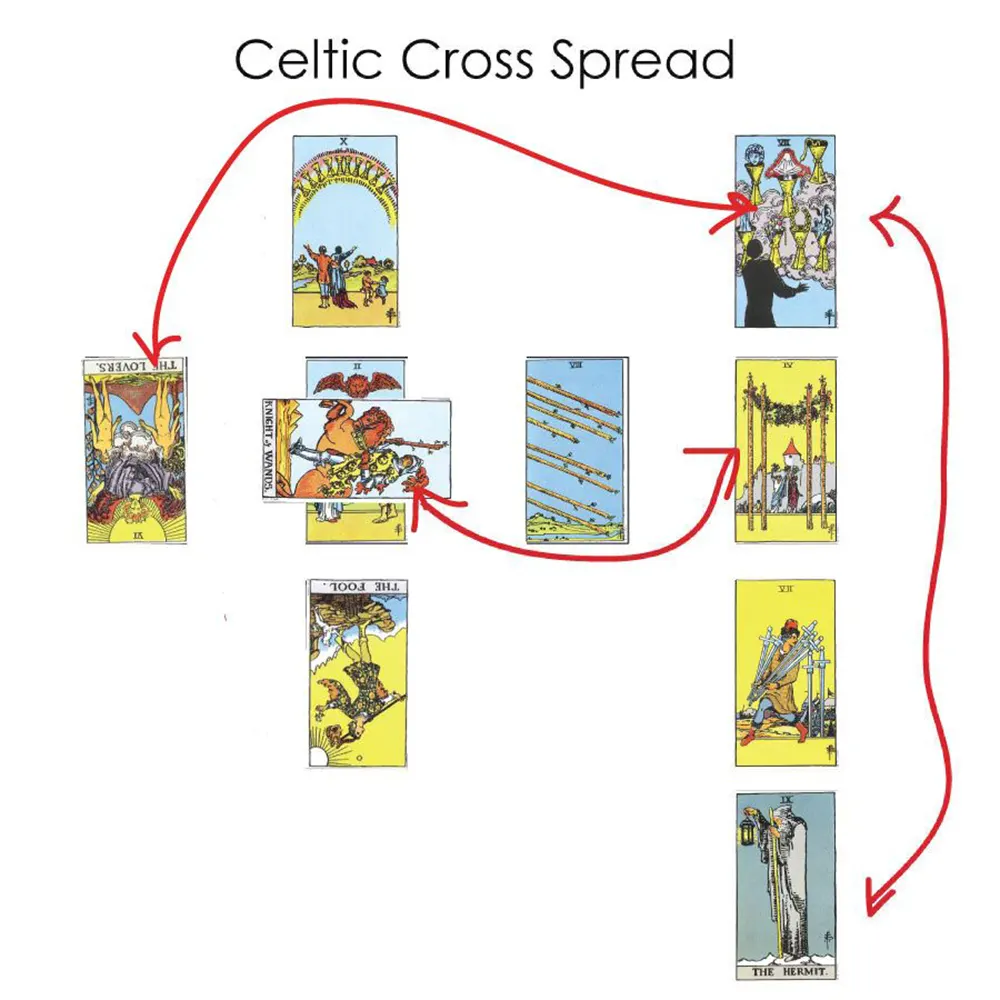
The Celtic Cross is the gold standard for in-depth tarot reading, with ten positions demanding expert-level interpretation of tarot spread positions.
Breaking Down the Celtic Cross Spread
- Position 1: The Present/The Querent – Core issue. Start interpreting tarot spread positions here as the heart of the reading.
- Position 2: Crossing Card – Immediate challenge or influence crossing Position 1.
- Position 3: Basis/Root Cause – Underlying factors.
- Position 4: Recent Past – Events leading up.
- Position 5: Possible Future – Potential developments.
- Position 6: Near Future – Imminent events.
- Position 7: The Querent’s Attitude – Self-perception.
- Position 8: Environment/External Influences – Surroundings.
- Position 9: Hopes and Fears – Inner desires or anxieties.
- Position 10: Outcome – Final resolution.
A deep dive: In Position 2, if it’s upright, it’s supportive; reversed, oppositional. For expertise, cross-reference with numerology—e.g., a “5” card in challenges signals conflict.
Unique Innovation: “Layered Celtic Cross.” After the initial layout, draw clarifying cards for ambiguous positions, creating sub-spreads. This adds layers, making your readings uniquely insightful.
Example: Query on career shift. Position 1: The Magician (Skillful action). Position 2: Five of Swords (Conflict). Interpretation: Current talents are hindered by workplace drama, but Position 10 (Ten of Cups) promises fulfillment if addressed.
Variations and Custom Spreads
Customize spreads for specificity. For career, create a “Ladder Spread” with positions like “Current Step,” “Next Rung,” “Summit.” Interpreting tarot spread positions in custom layouts fosters creativity and personal relevance.
Tip: Use tables for clarity in complex spreads.
| Position | Meaning | Example Card | Interpretation Tip |
|---|---|---|---|
| 1 | Present | The Fool | Embrace new beginnings in interpreting tarot spread positions. |
| 2 | Challenge | The Tower | Look for disruption themes. |
| 3 | Advice | Strength | Focus on inner resilience. |
Incorporating Modern Elements: Technology and Mindfulness in Tarot
To make tarot contemporary, blend digital tools with traditional practices. Apps for virtual spreads can help practice interpreting tarot spread positions anytime. Pair with mindfulness: Meditate on each position before drawing, visualizing energy flow.
Unique Idea: “Affirmation Integration.” After interpreting a position, create a custom affirmation, like “I release past limitations” for a negative past card. This adds therapeutic value, aligning tarot with wellness trends.
Common Mistakes in Interpreting Tarot Spread Positions and How to Avoid Them
Beginners often overlook card interactions. Remedy: Always read positions in sequence and relation. Another pitfall: Over-reliance on book meanings. Counter with journaling: Record interpretations and reflect on accuracy.
For trustworthiness, cite ethical guidelines—never promise absolutes; tarot is guidance, not prediction.
FAQs: Common Questions About Interpreting Tarot Spread Positions
Here are answers to frequently asked questions, optimized for those searching how to interpret tarot spread positions.
What Does Each Position in the Celtic Cross Mean?
As detailed above, positions range from present issues to outcomes. Focus on synthesis for holistic readings.
How Do Reversed Cards Affect Tarot Spread Positions?
Reversals can soften or intensify meanings. In interpreting tarot spread positions, they often indicate internal blocks.
Can I Create My Own Tarot Spread Positions?
Absolutely! Custom positions tailored to your query enhance personalization in tarot reading basics.
What’s the Best Spread for Love Questions?
The Relationship Spread excels, as it balances individual and shared energies.
How Many Cards Should Beginners Use?
Start with three to five for manageable interpretation of tarot spread positions.
Advanced Strategies: Layering Meanings and Thematic Analysis
Delve deeper by layering astrological correspondences. Assign zodiac signs to positions—e.g., Aries for action-oriented spots. When interpreting tarot spread positions, match card elements to signs for richer insights.
Thematic analysis: Group positions into themes like “temporal” (past/future) or “emotional” (hopes/fears). This method reveals overarching narratives.
Case Study: A reading on health. Using Celtic Cross, Position 3 (Root: Four of Cups—apathy) and Position 10 (Outcome: The Sun—vitality) suggests addressing emotional stagnation leads to wellness.
Cultural and Historical Contexts in Tarot Spread Positions
Tarot’s roots in Renaissance Europe influence position meanings. The Celtic Cross, despite its name, draws from Western esotericism. Understanding this builds authoritativeness.
Unique Perspective: Adapt spreads for cultural sensitivity, like incorporating indigenous symbolism if appropriate, but always with respect to origins.
Practical Exercises to Hone Your Skills
- Daily Draw: Pull one card per position in a mini-spread.
- Partner Readings: Practice interpreting tarot spread positions with friends for feedback.
- Reverse Engineering: Lay cards randomly and invent positions, then interpret.
Ethical Considerations in Tarot Reading
Always prioritize consent and positivity. When interpreting tarot spread positions, frame advice empoweringly, avoiding fear-mongering.
Integrating Tarot with Other Practices
Combine with journaling: After a spread, write narratives based on positions. Or with crystals: Place stones on positions to amplify energies.
Unique Idea: “Tarot Vision Boards.” Use position interpretations to create visual collages for manifestation.
Troubleshooting Difficult Readings
If positions conflict, draw clarifiers. For unclear interpretations, step back and revisit with fresh eyes.
The Evolution of Your Tarot Practice
As you master how to interpret tarot spread positions, your style evolves. Experiment with themed decks (e.g., Rider-Waite vs. Thoth) to see positional variations.
Conclusion: Embracing the Journey of Interpretation
Interpreting tarot spread positions is more than a skill—it’s a gateway to profound self-awareness and connection. By starting with tarot reading basics and progressing to advanced techniques, you’ve equipped yourself with tools for meaningful insights. Remember, tarot isn’t about fortune-telling; it’s a mirror reflecting your inner wisdom. Approach each spread with curiosity, integrity, and an open heart, and watch as it transforms your life. Whether facing challenges or celebrating joys, let the positions guide you toward growth and fulfillment. Keep practicing, and may your readings always illuminate the path ahead.
Related Posts
How to Cleanse Tarot Deck: 10 Essential Methods and Rituals
The Importance of Grounding Before a Tarot Reading
How to Ask Tarot Questions: Choosing the Right One for Accurate Insights
Understanding the Role of the Querent in a Tarot Session
Combining Tarot with Pendulums for Clarity
How to Read Tarot Cards for Beginners: A Step-by-Step Guide