
In the vast tapestry of human history, the history of astrology stands out as a captivating thread that weaves together our innate curiosity about the cosmos and our desire to understand our place within it. As a palm reader and astrologer, I’ve spent years delving into the stars and lines of fate, and I can tell you that the origins of astrology are as ancient as civilization itself. This astrology guide (basics) explores how astrology evolved from rudimentary celestial observations in Mesopotamia to the sophisticated, personalized horoscopes we see today. Whether you’re a skeptic or a believer, understanding the history of astrology reveals profound insights into human culture, science, and spirituality.
The history of astrology begins thousands of years ago, when early humans looked to the night sky for guidance. What started as simple star-gazing for agricultural and navigational purposes blossomed into a complex system of divination and prediction. This journey through the evolution of astrology highlights key milestones, influential figures, and cultural shifts that have shaped it. By examining the ancient astrology practices of Babylon, Egypt, Greece, and beyond, we’ll uncover how these foundations influence modern interpretations. If you’re new to this, think of it as a beginner’s roadmap to the stars—one that demystifies the origins of astrology and invites you to explore its enduring appeal.
The Birth of Astrology in Mesopotamia: The Cradle of Celestial Divination
The history of astrology traces its deepest roots to ancient Mesopotamia, particularly in the region of Babylon around 3000 BCE. Here, in the fertile lands between the Tigris and Euphrates rivers, early Sumerians and later Babylonians developed one of the world’s first writing systems—cuneiform—which allowed them to record celestial events meticulously. These observations weren’t just scientific; they were deeply intertwined with religion and governance. Kings consulted astrologers to interpret omens from the stars, believing that the movements of planets like Venus (associated with the goddess Ishtar) foretold prosperity or peril.
Babylonian ancient astrology was omen-based, focusing on the positions of the sun, moon, and visible planets. By the 18th century BCE, texts like the Enuma Anu Enlil compiled thousands of celestial omens, predicting everything from floods to royal success. This system laid the groundwork for the zodiac, dividing the sky into 12 sections based on constellations. The Babylonians’ mathematical prowess—dividing circles into 360 degrees and time into 60 minutes—directly influenced how we chart the heavens today.
As an astrologer, I often draw parallels between these early practices and modern birth charts. Imagine a Babylonian priest-astrologer etching predictions on clay tablets; that’s the essence of the origins of astrology. Their work wasn’t mere superstition but a blend of empirical observation and myth, setting the stage for astrology’s global spread.
For a visual glimpse into this era, consider this image of an ancient Babylonian clay tablet.
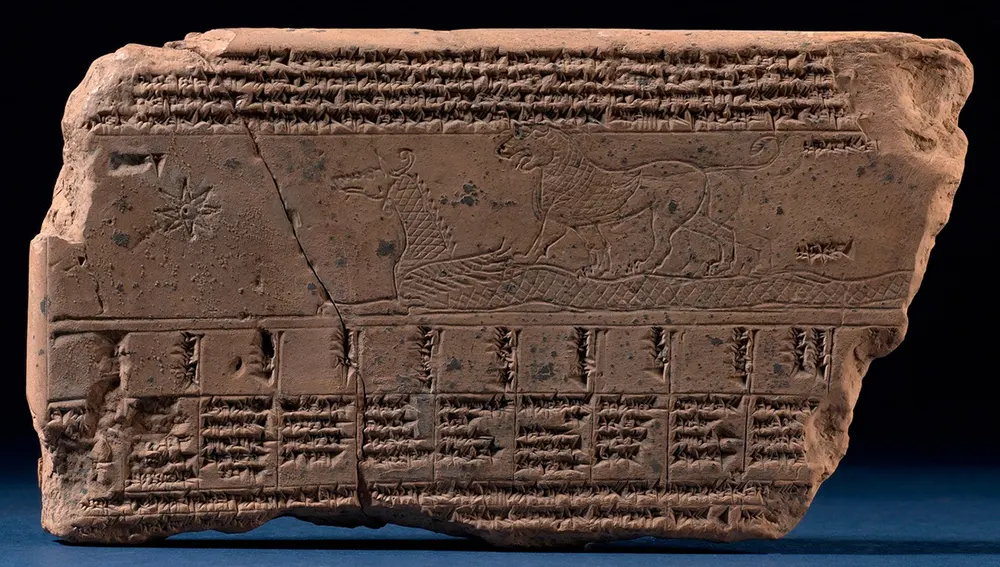
This artifact exemplifies how Babylonian astrology evolved from lunar calendars to predictive tools. By the 7th century BCE, under the Neo-Babylonian Empire, astrology became more personal, with horoscopes based on birth dates emerging. King Nabonidus, for instance, relied on astrologers to interpret eclipses, blending astronomy and divination in ways that echo today’s transit readings.
The influence of Mesopotamian ancient astrology extended through trade routes, reaching neighboring cultures and planting seeds for what would become a universal practice. Without these foundations, the history of astrology would lack its mathematical precision and symbolic depth.
Astrology in Ancient Egypt: Stars, Gods, and the Nile
Shifting our gaze to the Nile Valley, the history of astrology reveals a unique fusion in ancient Egypt around 3000 BCE. Egyptian ancient astrology was closely linked to their polytheistic religion, where stars and planets were manifestations of gods like Ra (the sun) and Thoth (the moon and wisdom). Unlike the omen-focused Babylonians, Egyptians used astronomy for calendrical purposes, aligning temples with solstices and equinoxes to honor deities.
By the Middle Kingdom (c. 2050–1710 BCE), decans—36 star groups—divided the night sky, each ruling a 10-day period. This system influenced the development of the zodiac, with constellations like Taurus symbolizing fertility tied to the Nile’s floods. The famous Dendera Zodiac, a bas-relief from the Ptolemaic era (c. 50 BCE), depicts a circular sky map blending Egyptian and Greek elements, showcasing the evolution of astrology.
As a chiromancer and astrologer, I see echoes of Egyptian practices in palm lines that mirror celestial paths—both seek harmony between human life and cosmic order. Pharaohs consulted star priests for auspicious times to build pyramids or wage wars, believing the afterlife involved navigating the stars, as described in the Pyramid Texts.
The integration of Babylonian ideas during the Persian conquest (525 BCE) enriched Egyptian astrology origins, leading to horoscopic astrology where individual fates were read from birth charts. This cross-cultural exchange underscores the history of astrology as a shared human endeavor.
To illustrate, here’s an image of the Dendera Zodiac.
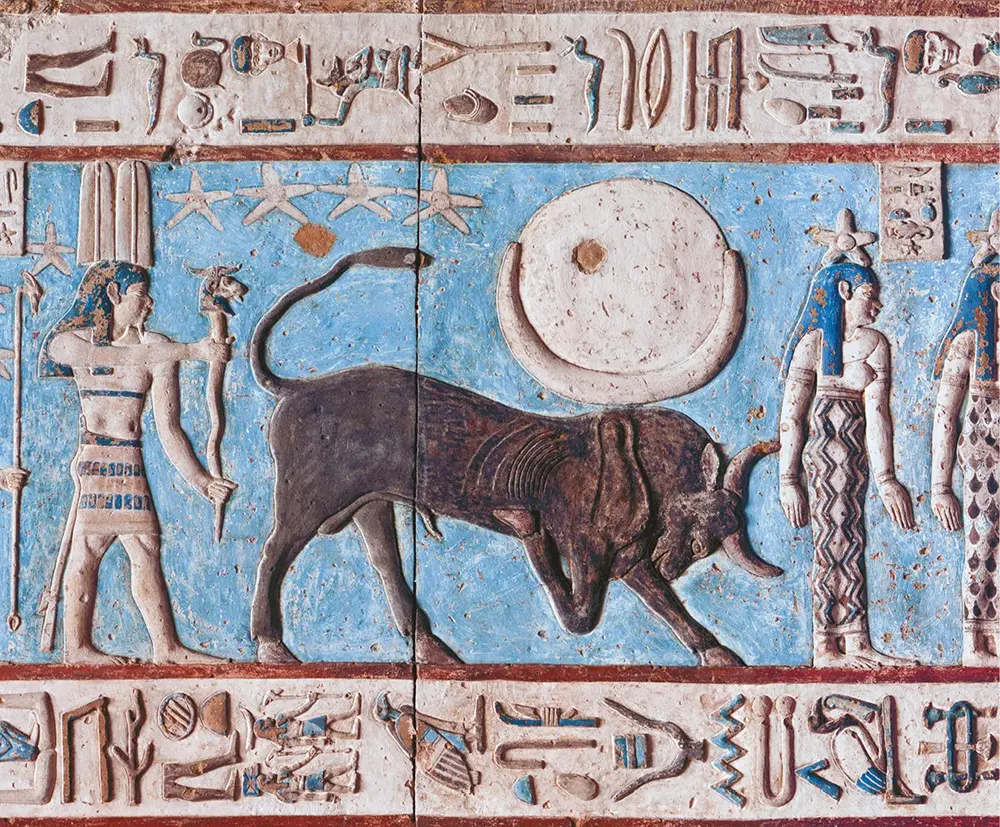
This zodiac not only served religious functions but also practical ones, like predicting Nile floods essential for agriculture. Egyptian astrology’s emphasis on cycles—birth, death, rebirth—resonates in modern concepts like karmic astrology, reminding us of its lasting impact on the history of astrology.
Greek and Hellenistic Influences: Philosophy Meets the Stars
The history of astrology took a philosophical turn in ancient Greece around the 6th century BCE. Influenced by Babylonian and Egyptian imports via trade and conquest, Greek thinkers like Thales and Pythagoras began systematizing celestial knowledge. Astrology became intertwined with philosophy, mathematics, and medicine.
Hippocrates, the father of medicine, famously said, “A physician without knowledge of astrology has no right to call himself a physician,” linking humors to planetary influences. But it was Claudius Ptolemy (c. 100–170 CE) who codified astrology in his Tetrabiblos, distinguishing it from astronomy while arguing that celestial bodies affect earthly affairs through natural causes.
Greek ancient astrology introduced the tropical zodiac, aligning signs with seasons rather than constellations, a system still used today. Figures like Aristotle pondered the stars’ role in fate versus free will, debates that echo in contemporary astrology discussions.
During the Hellenistic period (323–31 BCE), under Alexander the Great’s empire, astrology flourished in Alexandria, blending Greek rationality with Eastern mysticism. This era saw the first personal horoscopes, calculating ascendants and houses based on birth time.
In my practice, I often reference Ptolemy’s work when interpreting charts, as his geocentric model—though outdated scientifically—captures astrology’s symbolic essence. The origins of astrology in Greece transformed it from divination to a tool for self-understanding.
Visualize Ptolemy at work with this historical depiction.
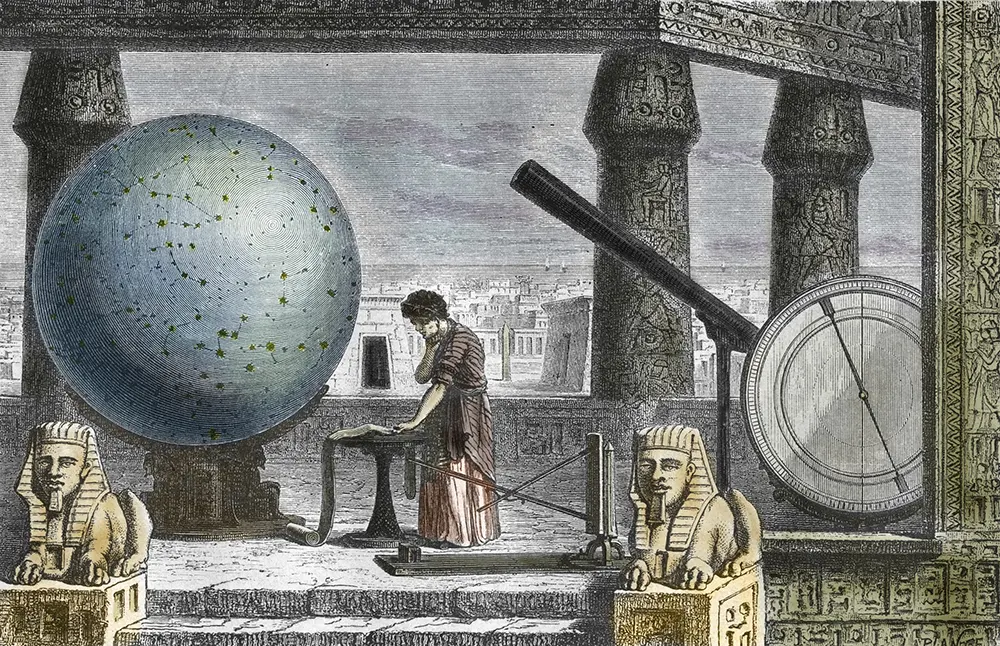
Ptolemy’s Tetrabiblos remains a cornerstone, influencing how we view planetary aspects and dignities. The Greek legacy in the history of astrology is its intellectual framework, making it accessible beyond royal courts.
Roman Adoption and Expansion: Astrology for the Empire
As Rome rose to power, the history of astrology expanded across the Mediterranean. Romans adopted Greek and Eastern practices, integrating them into daily life and politics. Emperors like Augustus consulted astrologers, with his Capricorn sun sign emblazoned on coins.
Manilius’ Astronomica (c. 10 CE) poeticized astrology, describing zodiac influences on personality. Astrology became popular among all classes, with street astrologers offering readings in forums. However, it faced skepticism; Cicero critiqued it in De Natura Deorum, questioning determinism.
The Roman Empire’s vastness spread ancient astrology to Britain, Gaul, and beyond, syncretizing with local beliefs. Mithraism, a mystery cult, incorporated astrological symbolism in its temples.
In modern terms, Roman astrology resembles today’s sun-sign columns—simplified for mass appeal. As an astrologer, I appreciate how Romans democratized the practice, making it relatable.
The evolution of astrology under Rome set precedents for its survival through Christianity’s rise, despite occasional bans.
Astrology in Other Ancient Cultures: Global Perspectives
The history of astrology isn’t confined to the West; parallel systems emerged in China and India. Chinese astrology, dating to the Shang Dynasty (c. 1600 BCE), used a 12-year animal cycle and five elements, focusing on harmony with nature.
Indian Vedic astrology (Jyotisha), from the Vedas (c. 1500 BCE), emphasizes karma and reincarnation, with nakshatras (lunar mansions) guiding predictions. These Eastern traditions highlight astrology’s universal appeal, adapting to cultural contexts.
Comparing them enriches the origins of astrology, showing diverse interpretations of the same stars.
Medieval and Islamic Contributions: Preserving the Flame
During the Middle Ages, the history of astrology shifted to the Islamic world. Scholars like Al-Biruni and Albumasar translated Greek texts, advancing mathematical astrology. In Europe, despite Church opposition, astrology thrived in courts, with figures like Guido Bonatti advising rulers.
Islamic innovations, like the Arabic parts, enhanced predictive accuracy, influencing Western revival.
Renaissance Revival: Astrology Reborn
The Renaissance marked a resurgence in the history of astrology. Humanists rediscovered classical texts, with figures like Marsilio Ficino blending Platonism and astrology. Nostradamus’ prophecies captivated Europe, while Kepler and Galileo dabbled in horoscopes despite astronomical pursuits.
Manuscripts from this era beautifully illustrate zodiacs and planetary tables.
To capture this, here’s a Renaissance manuscript image.
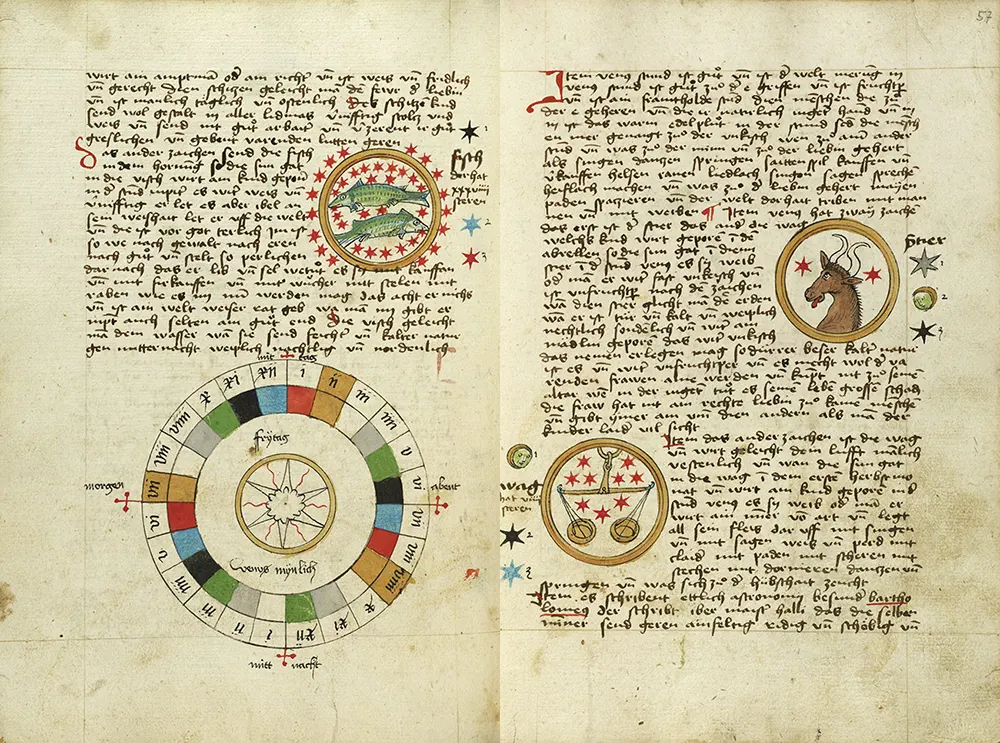
This period humanized astrology, emphasizing individual potential.
Enlightenment and Decline: Science vs. Mysticism
The Enlightenment challenged the history of astrology, with rationalism deeming it pseudoscience. Yet, it persisted in almanacs and folk traditions, surviving through Freemasonry and esoteric circles.
Modern Revival and Pop Culture: Astrology Today
The 20th century revived the history of astrology through psychology and media. Carl Jung’s synchronicity linked archetypes to charts, while newspapers popularized sun-sign horoscopes.
Today, apps and social media make astrology accessible, blending tradition with technology. As a palm reader, I integrate it with chiromancy for holistic insights.
Here’s a modern horoscope chart.
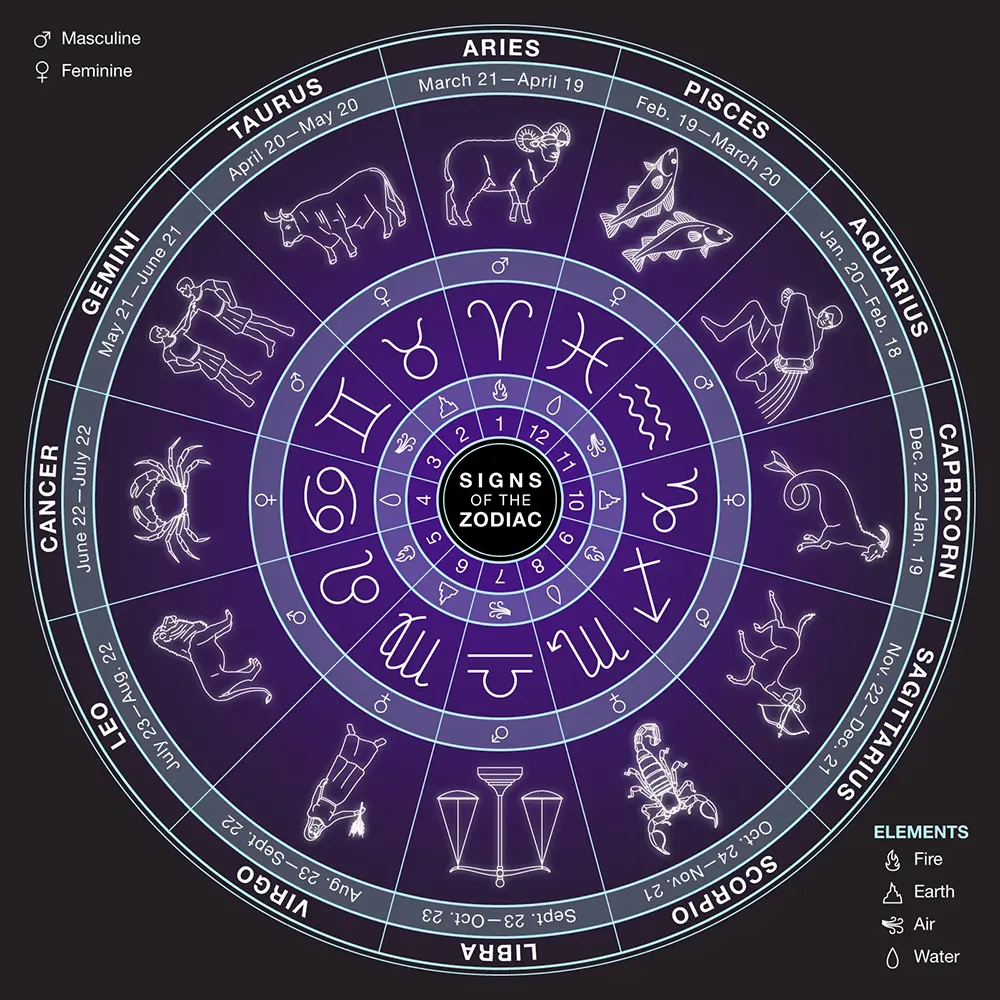
Astrology in pop culture, from magazines to memes, keeps it vibrant.
And an image of newspaper horoscopes.

Common Questions about the History of Astrology
In my experience as an astrologer, people often ask:
- What are the true origins of astrology? The origins of astrology lie in ancient Mesopotamia, where celestial omens were first recorded.
- How did astrology spread from ancient civilizations? Through trade, conquests, and cultural exchanges, influencing Greece, Rome, and beyond.
- Is modern astrology different from ancient practices? Yes, it incorporates psychology and technology, but retains core elements like zodiac signs.
- Why was astrology banned at times? Due to religious and scientific conflicts, but it always resurfaced.
- Can astrology be considered a science? While not empirical, its historical ties to astronomy make it a proto-science.
These FAQs address curiosities in the history of astrology.
Conclusion: The Enduring Legacy of the Stars
Reflecting on the history of astrology, from Babylonian tablets to digital apps, it’s clear this practice mirrors humanity’s quest for meaning. As we navigate modern uncertainties, astrology offers timeless wisdom—reminding us that, like the stars, our stories are interconnected and ever-evolving. Whether for guidance or curiosity, exploring its origins enriches our understanding of self and universe. In the words of an ancient sage, the stars incline but do not compel; the choice is ours.
Related Posts
Birth Chart: Unlocking the Secrets of Natal Astrology
Debunking Astrology Myths: Separating Fact from Fiction in the Stars
How Astrology Influences Your Daily Life: A Simple Explanation
Introduction to Astrology: Unraveling the Stars and Planets